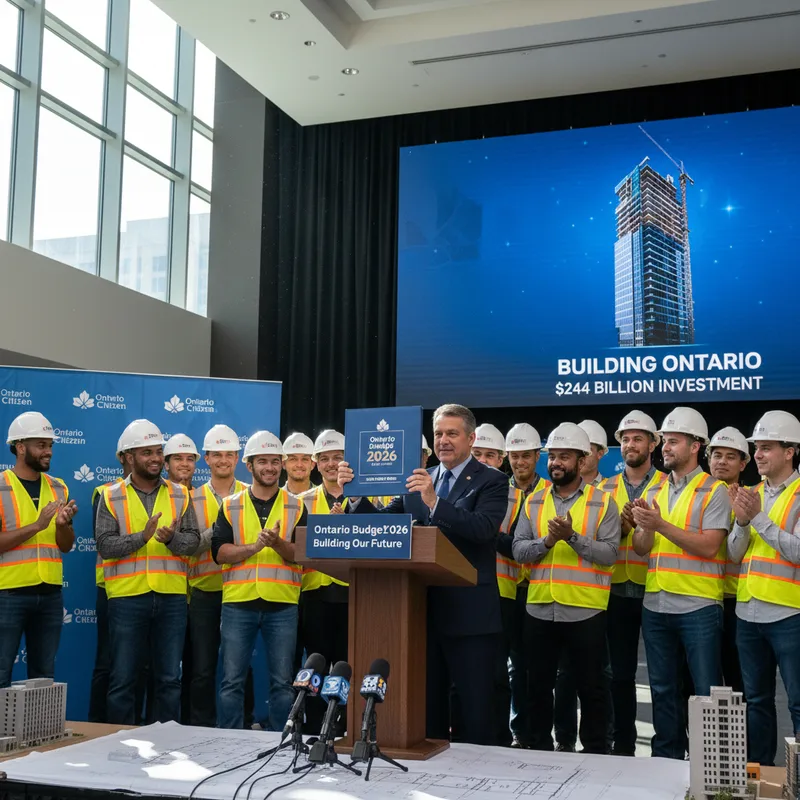
Ontario's Progressive Conservative government tabled a $244-billion budget for 2026 on Tuesday, a massive spending plan that reaffirms its commitment to building homes and key infrastructure while offering continued cost-of-living relief to residents.
Presented by Minister of Finance Peter Bethlenfalvy, the eighth budget from Premier Doug Ford's government continues its "get it done" mantra, channelling billions into capital projects. The plan comes, however, with a substantial increase in the provincial deficit, reflecting significant economic pressures and major investments.
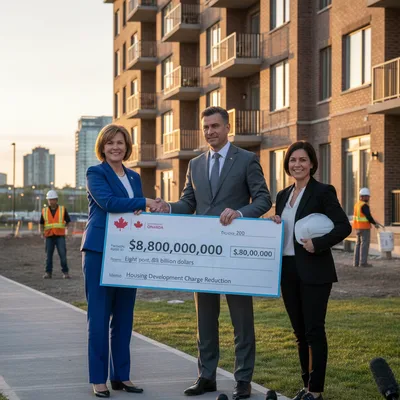
The budget earmarks substantial funds for construction, aiming to tackle the province's persistent housing shortage. The spending blueprint is bolstered by a recent agreement with the federal government that will see a combined $8.8 billion flow to municipalities to support the construction of housing and related infrastructure.
This funding is intended to help cities and towns manage the costs associated with growth, particularly after the province controversially cut development charges that municipalities levy on new-builds to fund services. The new federal-provincial deal aims to compensate for that shortfall, contingent on municipalities meeting their provincially mandated housing targets.
A push for housing and infrastructure
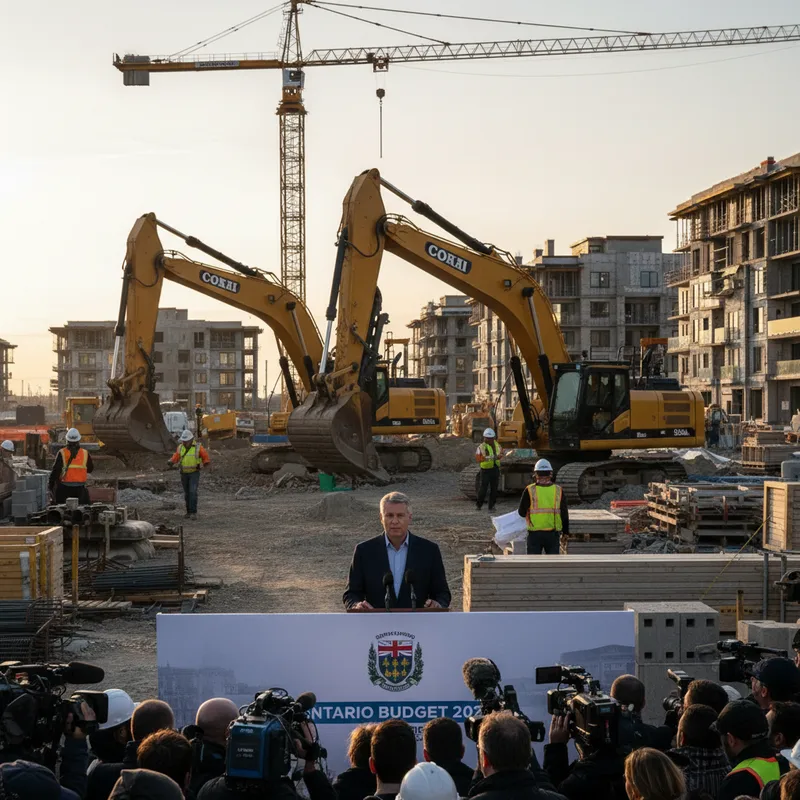
At the heart of the budget is a strategy to accelerate the construction of homes, highways, and public transit. The government is positioning these investments as essential for the province's future economic prosperity and ability to accommodate a rapidly growing population. This includes large-scale projects across the province, from highway expansions to new public transit lines.
Locally, municipalities are already planning for this growth, with projects like the major infrastructure plan for Windsor's Sandwich South lands serving as a template for the kind of development the province hopes to foster. The budget aims to remove barriers and provide the financial backbone for more such initiatives across Ontario.
However, the government's focus on rapid development has not been without controversy. Some projects have faced scrutiny over their impact on provincially significant lands, and debates continue over the balance between development and regulatory oversight, as seen in cases like the dispute that led to a court order for a developer to demolish an illegal structure in Ajax.
Addressing the cost of living
While building is the central theme, the budget also includes measures aimed at making life more affordable for Ontarians. A key plank of this strategy is the extension of the temporary gas tax cut. The government will prolong the 5.7-cent-per-litre reduction for another year, a measure that has been in place since 2022. This move is designed to provide drivers with continued relief at the pumps amid fluctuating fuel prices and broader inflation.
These affordability measures are being rolled out as the province faces a complex economic landscape. While the government projects growth, it's also navigating challenges like rising unemployment and the potential threat of international tariffs, issues that were looming as the province braced for its eighth budget under Ford.
The focus on affordability comes as many households continue to feel financial pressure. While provincial measures like the gas tax cut offer some relief, broader economic conditions, such as the rising cost of living in major cities, remain a significant concern for residents. For comparison, other major centres like Boston are also grappling with significant budget challenges, highlighting the widespread fiscal pressures on governments.
Deficit grows amid criticism
The extensive spending commitments have led to a 'massive increase' in the province’s projected deficit, a point of concern for opposition parties and fiscal watchdogs. The government argues the increased spending is a necessary investment in the province's future, but critics worry about the long-term consequences of rising provincial debt. The budget arrives in a climate of fiscal tightening in other government sectors, with the federal government, for instance, planning thousands of job cuts through the coming years.
The budget’s priorities have also drawn criticism from social advocates. In a significant move, all six living former mayors of Toronto, including John Tory, David Crombie, Art Eggleton, Mel Lastman, Barbara Hall, and John Sewell, sent a joint letter to Premier Ford and Health Minister Sylvia Jones. They urged the government to reverse its decision to halt funding for several supervised consumption sites.
The letter highlights a growing tension between the government's focus on large-scale infrastructure and concerns about funding for social and health services. The closure of a site in Parkdale has sparked widespread protest, with advocates arguing these facilities are critical for preventing overdose deaths. More information on the 2026 Budget can be found on the Government of Ontario's official website.
As the details of the budget are debated in the legislature in the coming weeks, the discussion will likely centre on whether the long-term benefits of building for tomorrow justify the high fiscal and social costs of today.