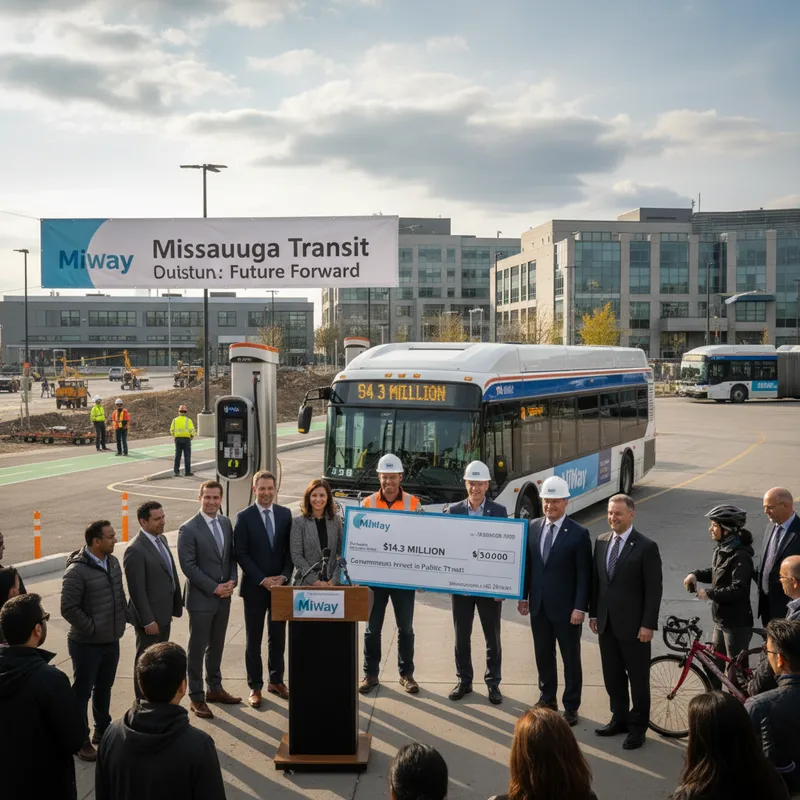
Mississauga’s public transit and active transportation networks are set to receive a significant boost, thanks to a joint investment of more than $14.3 million from the federal, provincial, and municipal governments. The funding, announced Tuesday, will support two major projects aimed at modernizing the city's bus fleet and expanding its cycling infrastructure.
The investment is a collaborative effort, with the Government of Canada contributing over $5.75 million, the Government of Ontario providing nearly $4.8 million, and the City of Mississauga funding the remaining $3.8 million. The projects are designed to enhance transit reliability, improve safety for cyclists, and help Mississauga meet its ambitious climate goals.
A significant portion of the funding is dedicated to preparing MiWay, Mississauga's public transit service, for a greener future. The project involves designing and implementing significant modifications to three bus storage and maintenance facilities. These upgrades will allow the garages to house and charge a new fleet of battery-electric buses, a key component of the city’s plan to transition to zero-emission vehicles.
This move is central to Mississauga's strategy to reduce its greenhouse gas emissions by 80 per cent by the year 2050. By investing in the necessary infrastructure now, the city is laying the groundwork for a large-scale fleet conversion that will significantly cut local air pollution and reduce traffic congestion for its more than 700,000 residents.
Modernizing transit for a greener future
The push for electric buses reflects a broader trend across Ontario and Canada to green public infrastructure. The federal funding flows from the Public Transit Infrastructure Stream of the Investing in Canada Infrastructure Program, a long-term national plan to build modern, resilient, and sustainable public infrastructure. This stream specifically targets projects that improve public transit networks and transform how Canadians live and move.
This investment demonstrates that our federal and provincial partners recognize the importance of continued investment in Mississauga’s transit and active transportation infrastructure. Upgrading our transit facilities to support zero-emissions buses moves us closer to our climate goals. At the same time, new planning for safer cycling routes will make it easier for residents to choose active transportation. Together, these projects help build a cleaner, more connected and more sustainable Mississauga now and for the future.
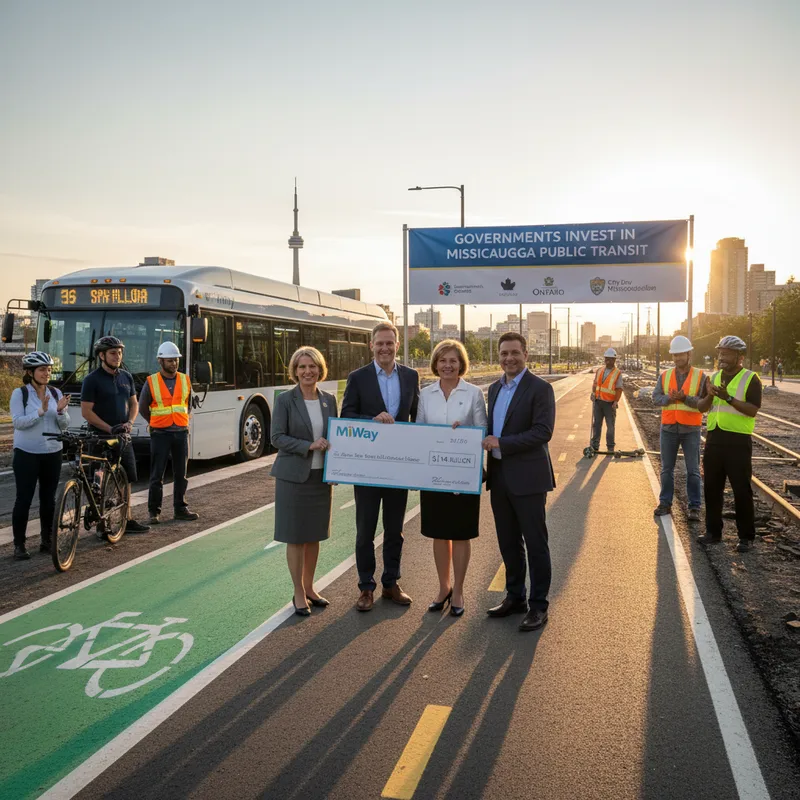
Ontario’s Minister of Transportation, Prabmeet Sarkaria, emphasized the project's role within the province's wider transit vision. "Our government is investing $70 billion in the largest transit expansion in North America, while delivering the local transit infrastructure Mississauga needs to grow," Sarkaria says. He noted the investment supports not just the future electrification of the city's fleet but also creates safer cycling and better connections to the regional GO Transit network. This is part of a larger provincial effort that includes projects like the Wellesley Street upgrade and the tunnelling for the new Ontario Line in Toronto.
New cycling paths to improve neighbourhood connectivity
The second project funded by the investment focuses on active transportation. It will finance the development of a detailed plan and preliminary designs for nearly eight kilometres of new bicycle paths along three key arterial roads: Aquitaine Avenue, Argentia Road, and Millcreek Drive.
These new paths are a core component of Mississauga’s Cycling Master Plan. They are strategically designed to improve connectivity to the Meadowvale and Lisgar GO Rail Stations, making it safer and more convenient for commuters to bike to and from the train. Officials hope that providing better cycling infrastructure will encourage more residents to adopt active transportation for their daily commutes and recreational activities.
Rechie Valdez, Member of Parliament for Mississauga. Streetsville, says the federal investments will enhance reliability and safety. "Our Federal Government will continue to support communities from coast to coast to coast to provide the funding resources they need to be resilient in changing times,” she says on behalf of the federal infrastructure minister.
A coordinated approach to infrastructure
This coordinated funding announcement highlights a multi-level government approach to tackling municipal challenges like traffic congestion and climate change. Similar to investments made to connect residents in Kawartha Lakes, this project leverages funds from different levels of government to achieve a local objective. These kinds of partnerships are becoming increasingly common for large-scale infrastructure projects, such as the major upgrades to the Bunbury waterfront in Australia, which also saw significant government investment.
The provincial contribution is part of a wider strategy that includes other programs designed to make transit more affordable and accessible. The Ontario Gas Tax program, which dedicates two cents from every litre of gasoline sold to municipal transit, provided Mississauga with over $23 million for the 2024-25 period. Additionally, the province’s One Fare program, which allows free transfers between MiWay and other regional transit services like GO Transit and the TTC, has reportedly saved Ontarians over $230 million since its launch in 2024.
The projects announced today are conditional on fulfilling all consultation requirements with Indigenous groups and completing environmental assessments. As Mississauga continues to grow, these investments in sustainable transit are seen by leaders as crucial for ensuring the city remains a connected, accessible, and environmentally responsible place to live.