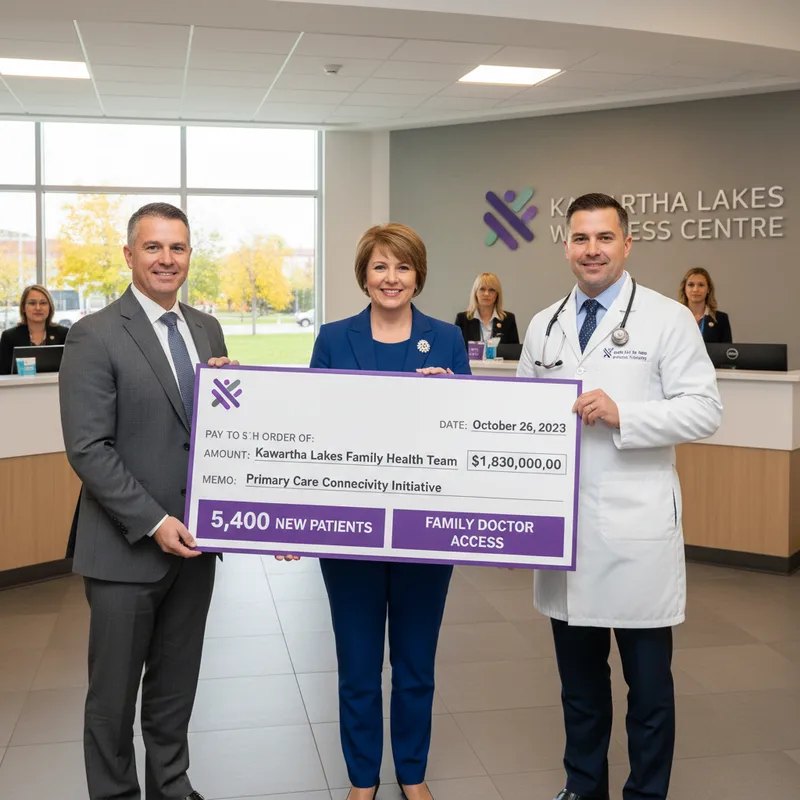
The Ontario government is investing $1.83 million this year to connect up to 5,434 people in Kawartha Lakes to primary care services, a move aimed at tackling the ongoing shortage of family doctors in the region. The funding will bolster the City of Kawartha Lakes Family Health Team, enabling it to hire more health professionals and expand its capacity to serve residents who currently lack a primary care provider.
This local investment is a component of the province's broader Primary Care Action Plan, an ambitious initiative designed to ensure every Ontarian has access to a family doctor or primary care team by 2029. The government has committed a total of $3.4 billion to this plan through 2029 to support healthcare infrastructure and providers across the province.
Laurie Scott, MPP for Haliburton–Kawartha Lakes–Brock, announced the funding, emphasizing its local impact. "This investment of $1.8 million to expand primary care services in the City of Kawartha Lakes will connect more than five-thousand local residents to the high-quality public health care they need and deserve," Scott said. "This funding is another important step toward supporting our health‐care providers, strengthening local health‐care infrastructure, and advancing our goal of ensuring that every person in Haliburton–Kawartha Lakes–Brock has access to a primary care provider by 2029.”
Expanding team-based care
The City of Kawartha Lakes Family Health Team will use the new funds to recruit additional health professionals, which will directly improve local access to comprehensive, team-based care. Officials confirmed the team will establish a formal process to accept new patients and will communicate the details to the community once finalized.
Mike Perry, the executive director of the family health team, highlighted the practical benefits of the investment. “These newly funded health professionals will help us reach more patients and get them connected to a doctor or nurse practitioner," Perry stated. "This funding will also make our local health care stronger and helps address the gaps in rural Ontario.”
This investment is a clear recognition by the government of the importance of family health care to our patients and communities. What we are building with partners will have such a significant impact. We are truly stronger when we work together.
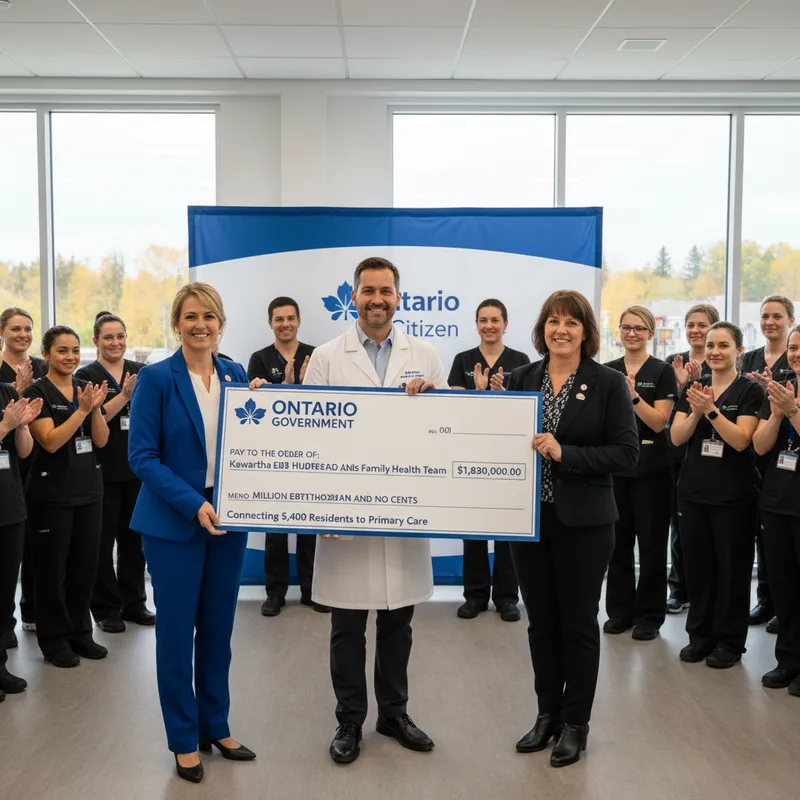
The focus on a team-based model means that residents will have access to a range of healthcare professionals, not just a family doctor. This model is considered a more robust and responsive way to deliver care, particularly in areas with a shortage of physicians. It aligns with the province-wide strategy to build interconnected and convenient care, a key part of the government's Your Health plan.
Provincial plan exceeds targets
The Kawartha Lakes funding is part of a larger, province-wide push that officials say is already yielding positive results. All 124 teams that received funding through the latest call for proposals are expected to connect a total of 500,000 new patients across Ontario.
According to the Ministry of Health, the Primary Care Action Plan has already surpassed its initial goal for the 2025-2026 fiscal year. The original target was to connect 300,000 patients by March 31, but as of January 1, the province had already attached 330,000 people to a primary care provider. This progress suggests the government's strategy is gaining momentum. The initiatives are part of a wider effort by the provincial government to improve public services and accountability, similar to the overhaul of school board governance and renewed vows to address systemic issues in correctional facilities.
“Through our Primary Care Action Plan, we are connecting more people to care and have already exceeded our 2025-26 attachment target,” said Sylvia Jones, Deputy Premier and Minister of Health. “By connecting more families to care in the City of Kawartha Lakes, our government is taking the next step toward connecting everyone in the province to primary care by 2029.” This news comes as other regions, like Toronto, have been excluded from new federal immigration pathway, highlighting a tailored approach to regional needs.
Focus on health equity in rural areas
For rural communities like Kawartha Lakes, securing consistent access to healthcare has long been a challenge. Ryan Alexander, CEO of Community Care City of Kawartha Lakes, welcomed the investment as a step toward greater health equity. He said the funding “strengthens the role of primary care as a cornerstone of an effective and sustainable healthcare system.”
“It also affirms that health equity must guide how we connect people to care, ensuring that those who are most vulnerable and underserved have meaningful access to care,” Alexander added. The funding aims to close the gaps that often leave rural, elderly, and other vulnerable populations without a dedicated family doctor or nurse practitioner.
Residents of Kawartha Lakes who are currently without a family doctor can register with the province's Health Care Connect program. The program refers people without a regular primary care provider to doctors and nurse practitioners in their community who are accepting new patients. Residents can sign up online through the program's official registration portal or by telephone.