

Former patients of a Brantford dental clinic are facing an anxious wait after Grand Erie Public Health (GEPH) urged them to get tested for hepatitis B, hepatitis C, and HIV. The warning follows an investigation into Dr. George Chan Dentistry that uncovered numerous lapses in infection prevention and control, leading to the clinic's closure last November.
The clinic, located at 353 St. Paul Ave., was ordered to shut down on Nov. 3, 2025, after an investigation by Infection Prevention and Control (IPAC) officials. However, patients only began receiving letters advising them of the potential risk in mid-March, more than four months after the closure.
The notification letter, signed by GEPH’s medical officer of health Jason Malenfant, states that patients “may have been exposed to dental instruments that were improperly sterilized.” It warns that improperly sterilized instruments can spread infections, including bloodborne pathogens. While the letter describes the overall risk of infection as low, it strongly recommends patients speak with their doctors about getting tested.
Whistleblower speaks out on clinic conditions
The investigation was triggered by a complaint filed on Oct. 29, 2025, by Lyn Portelli, who was the clinic's receptionist at the time. Portelli told CBC News she became concerned after observing that she was not permitted in the clinical area. Seizing an opportunity when another staff member left for an errand, she investigated a patient room.
Portelli said she discovered loose, unpackaged dental instruments in a drawer, which should have been in sterilized packages. She also found materials for fillings that had expired in 2014 and a topical anesthetic gel that expired in 2007. Her findings prompted her to call the public health unit the next morning.
You trust these people when you go to them that … you’re in good hands.
Like other patients, Portelli and her elderly father, who were also patients of Dr. Chan, are now seeking testing. “You trust these people when you go to them that … you’re in good hands," she said.
'I’m very anxious about it,' says patient
For hundreds of former patients, the news has caused significant distress. Heather Harrington, whose two sons were also patients, received a photo of the letter from her husband while on vacation. “I'm very anxious about it, especially knowing the possibilities that are there,” she said. “It's something that I feel like a 12-year-old and a 14-year-old should never have to deal with.”
Harrington said her 14-year-old son began searching online for information about the diseases. “My 14-year-old was questioning and googling like, ‘can you die from HIV? What does hepatitis do to you?' It’s things that kids should never have to be scared about,” she said.
Other former patients expressed similar fears. Justin Currie, a patient for over two decades, said he worries about the potential of having unknowingly passed an infection to his girlfriend. Andrew Dukeshire, whose wife and children were longtime patients, said his family has undergone testing and is awaiting the results. “My kids are in danger, my wife’s in danger, I’m in danger,” Dukeshire said.
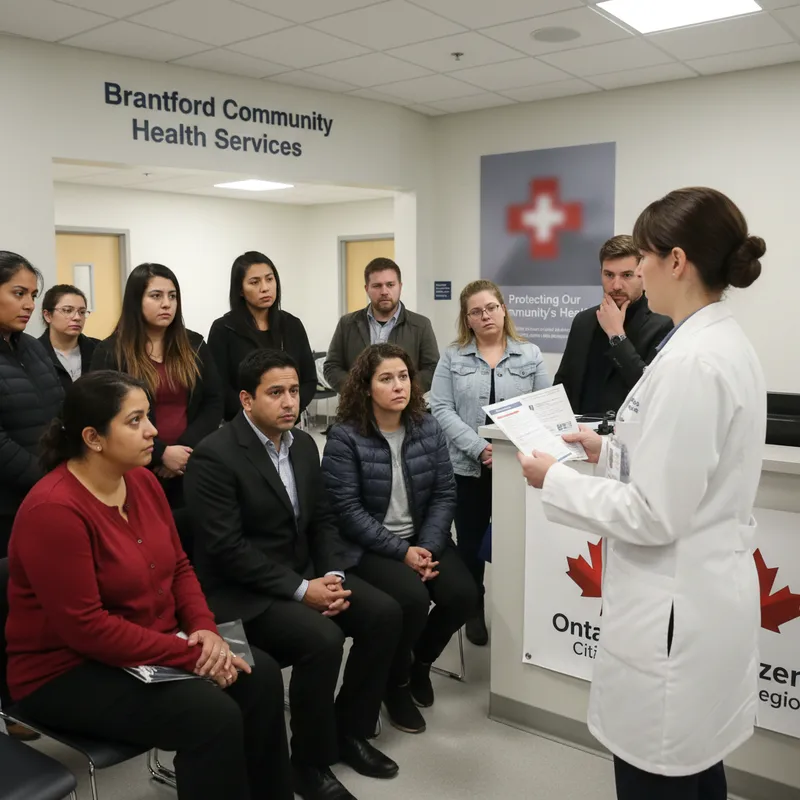
Investigation reveals 15 'significant' lapses
The full IPAC report, published on the GEPH website, details 15 separate lapses in the disinfection and sterilization of reusable instruments. These included the improper storage of sterile items and having clean instruments stored loose and unpackaged in treatment rooms, confirming what Portelli had discovered.
Dr. Aviv Ouanounou, an associate professor in the University of Toronto’s faculty of dentistry, described the number of lapses as significant. He noted that while temporary shutdowns of clinics are uncommon, a permanent closure is “extremely rare.” He added that letters urging patients to get tested for HIV and hepatitis are only issued when there is a real risk of exposure to bloodborne pathogens.
The four-month delay between the clinic's closure in November and the patient notification letters in March has raised questions, but GEPH declined to provide additional information beyond what is available in its public report. The profession of dentistry in Ontario has a long history, evolving from self-taught practitioners in the 19th century to a highly regulated field today. Organizations like the Royal College of Dental Surgeons of Ontario (RCDSO), whose official publication dates back to 1987, and publications like the Ontario Dentist journal exist to establish and maintain high standards of care and knowledge translation. These standards are designed to prevent the very issues uncovered at the Brantford clinic, making the scale of the failure particularly jarring in 2026. In other news impacting the healthcare sector, Ontario and Ottawa offer billions to cut housing development fees.
Regulator confirms investigation
According to the RCDSO, the regulatory body for Ontario dentists, Dr. George Chan is still listed as entitled to practice, having first registered in 1986. The college confirmed it is looking into the GEPH report.
“The college has the authority to investigate and take appropriate action based on concerns that occurred during the time that a dentist has an active certificate of registration," the RCDSO said in a statement. It clarified that an investigation can proceed regardless of whether the dentist is currently practising.
Public health experts stress the importance of a proactive approach to infection control. Dr. Jeya Nadarajah, a physician lead at Public Health Ontario, explained that IPAC investigations are typically reactive and complaint-based. “Public health guidance, really, it only works if there's ownership taken to go after it and ensure that we're all practising that way," Nadarajah said. "We have evidence that an IPAC-informed environment does very well in terms of reducing the transmission of infections.”
Dr. Ouanounou said he was “quite shocked that in 2026 we are dealing with situations like that.” He noted that while there can be reasons a dentist might not follow proper protocols, such as cost or time pressures, “None of these, of course, justifies non-compliance.”
What patients can do
The incident has left many patients questioning their trust in medical professionals. “Can I trust the dentist? Can I trust my medical professionals?” Andrew Dukeshire asked.
Dr. Ouanounou advises patients to be vigilant. He recommends observing if the dental office is clean, if staff wash their hands and wear appropriate protective equipment, and if instruments are brought out in sealed, sterilized packages. He said a clinic's unwillingness to answer questions about safety protocols is a major red flag.
Dr. Nadarajah encourages patients who observe a concerning practice to first speak with the dentist or hygienist. “If you’re further concerned, consider reporting to your regulatory college or to your local public health unit,” she says.