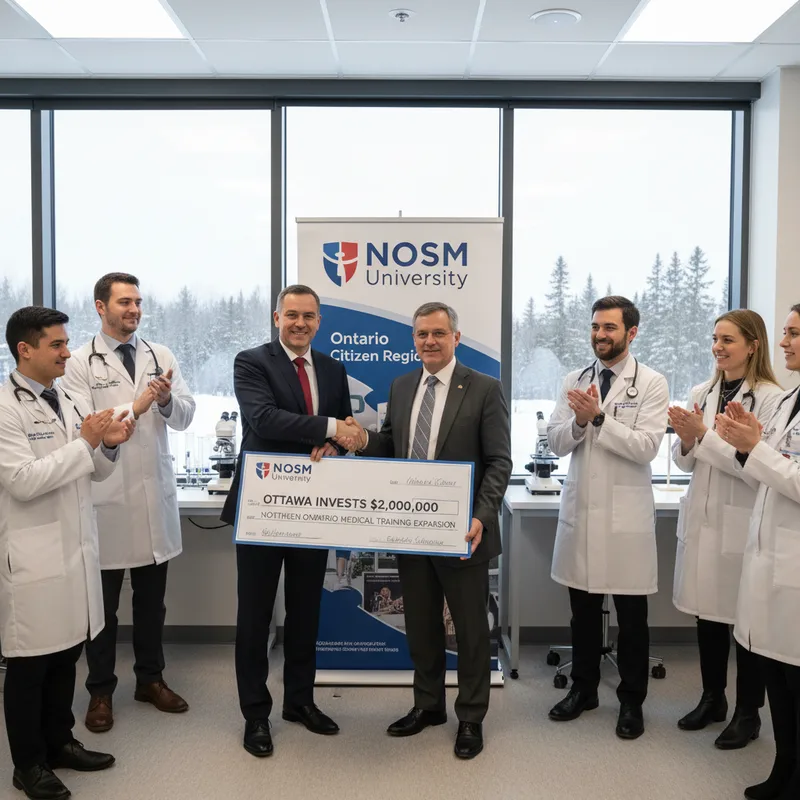
The federal government is investing nearly $2 million to significantly expand medical training across Northern Ontario, a move aimed at tackling the region's persistent doctor shortage by doubling the number of students at the Northern Ontario School of Medicine (NOSM) University.
In Thunder Bay on Wednesday, Patty Hajdu, the federal Minister of Jobs and Families and Minister responsible for FedNor, announced the $1,968,386 investment. The funds are designated for establishing and upgrading medical training facilities in 87 municipalities and Indigenous communities, with the goal of graduating and retaining more physicians in the North.
The investment, provided through FedNor's Northern Ontario Development Program (NODP), will allow NOSM University to retrofit learning spaces and purchase specialized equipment. This includes modernizing sites with essential technology like video conferencing and advanced information and communications technology, bringing them up to the standards required for modern medical education.
As a result of the expansion, NOSM University expects to increase its Doctor of Medicine (MD) program enrolment from 425 to 852 students over the next four years. This ambitious goal is central to the strategy of building a sustainable healthcare workforce for the region.
A strategic expansion across the North
The initiative is designed to embed medical training directly within the communities that need physicians most. The 87 sites are strategically spread across the vast region, ensuring that students gain experience outside of major urban centres. This model is based on evidence suggesting that physicians who train in rural and remote areas are more likely to practice there after graduation.
Northern Ontario thrives when communities are stronger. By helping NOSM University establish training facilities across the region, we are focused on what we can control and on building resilient communities,” said Minister Hajdu. “To benefit generations, this project will help the University double its enrollment so they can graduate more doctors that will have established roots here at home.
Of the new and expanded facilities, five will be located at larger hospitals in Sudbury, North Bay, Sault Ste. Marie, Thunder Bay, and Timmins. An additional 13 locations will serve as Comprehensive Community Clerkship sites, which provide immersive, long-term placements for medical students. The remaining 69 sites will be community-based clinical locations, with a significant focus on underserved populations.
Forty-three of these community sites will be situated within Indigenous communities, including Atikameksheng Anishnawbek, Moose Cree First Nation, and Wiikwemkoong Unceded Territory. The balance will serve rural and Francophone populations in towns such as Hearst, Kapuskasing, and West Nipissing, addressing a critical need for culturally and linguistically appropriate care.
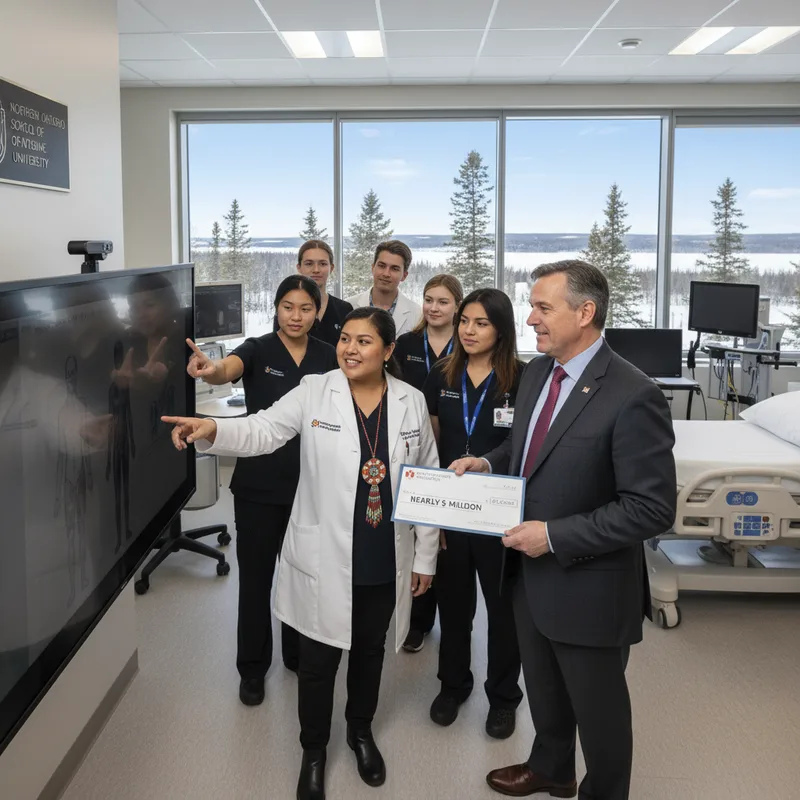
This broad distribution acknowledges the diverse healthcare landscape of Northern Ontario and the unique challenges faced by its residents, from remote First Nations to small industrial towns. By creating a permanent educational infrastructure in these areas, the project aims to foster deeper connections between the next generation of doctors and the communities they serve.
Addressing a critical need for physicians
The physician shortage in Northern Ontario is a long-standing crisis that affects access to primary and specialized care for hundreds of thousands of residents. According to the Ontario Medical Association, the region has significantly fewer family doctors and specialists per capita than the provincial average, leading to longer wait times and forcing many to travel long distances for treatment. NOSM University was founded in 2002 and became Canada\'s first independent medical university in 2022, with a specific social accountability mandate to improve the health of Northern Ontarians. This federal investment directly supports that mission by providing the physical and technological infrastructure needed to train a larger cohort of physicians with the skills and desire to practice in the North. It is a significant move in a region where economic development and public health are often intertwined, a topic of frequent discussion alongside provincial budgets, such as the one recently tabled by the Ford government and university initiatives to boost lecturer numbers.
Dr. Michael Green, President, Vice Chancellor, Dean and CEO of NOSM University, expressed gratitude for the federal support, highlighting its dual impact on healthcare and the economy.
'Doctors will learn, live and stay right here'
The focus on localized training is a deliberate strategy to build a homegrown healthcare workforce. Officials say the program is designed to ensure that medical learners become integrated into the social and professional fabric of Northern Ontario, increasing the likelihood they will remain after completing their residencies.
Sudbury MP Viviane Lapointe said the investment is crucial for the long-term health and prosperity of the region. “Establishing training facilities in municipalities, Indigenous and Official Language Minority Communities means more doctors will learn, live and stay right here at home in Northern Ontario,” she said. “This means stronger and healthier economies and improved access to health care for individuals and families across our region.”
The funding aligns with the federal government’s Prosperity and Growth Strategy for Northern Ontario, which prioritizes investments that build the economic and community development capacity of municipalities and Indigenous communities. By strengthening NOSM University, the government is also investing in a key regional institution, much like recent support for other community pillars in major Canadian cities, such as the new ownership of Toronto's WNBA team.
The expansion is not just about increasing student numbers, but about enriching the quality of medical education through direct exposure to the realities of northern practice. With modernised facilities and a larger footprint across the region, NOSM University is positioned to significantly bolster the front lines of healthcare in Northern Ontario for years to come.