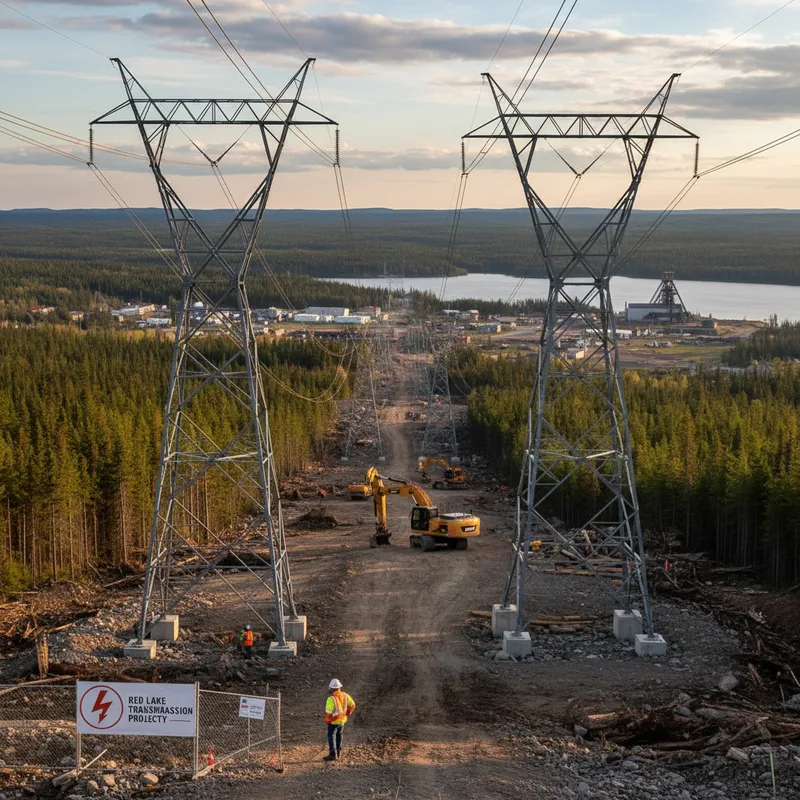
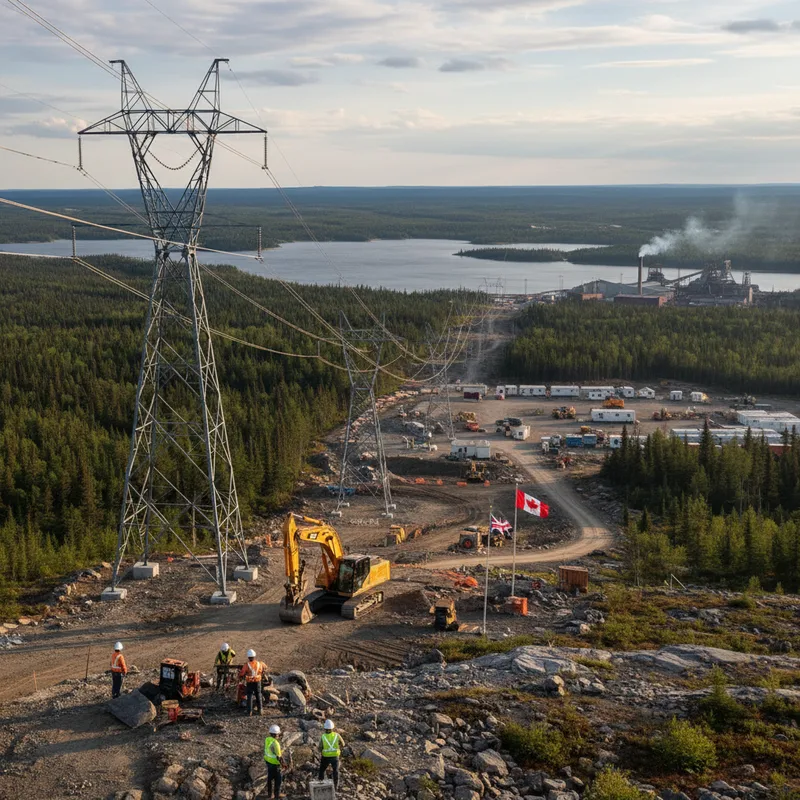
The Ontario government is accelerating the development of a new transmission line in the province's northwest, a move it says will power a booming mining sector and meet skyrocketing energy demands in the Red Lake region. Minister of Energy and Mines Stephen Lecce announced in Thunder Bay on Thursday that the Red Lake Transmission Project has been declared a priority, a designation that will fast-track the necessary approvals.
The project involves a new 162-kilometre, double-circuit 230-kilovolt transmission line that will run through Dryden, Ear Falls, and Red Lake. The government projects that electricity demand in the Red Lake area could surge by as much as 525 per cent by 2050, climbing from about 120 megawatts today to a potential 750 megawatts. This anticipated increase is driven by community growth and a thriving mining industry, which is projected to expand with 41 potential new mines by 2033.
Hydro One has been designated to lead the construction and development of the line, which is anticipated to be operational by the early 2030s. The province states this "critical piece of infrastructure" is expected to support 5,800 jobs and contribute $830 million to the GDP, enabling major new investments across the north.
Addressing energy gaps and fostering growth
Local leaders say the new infrastructure is desperately needed to address long-standing energy challenges. "For too long, communities in our region have faced challenges related to limited transmission capacity and [have been] vulnerable to many outages, but this project directly addresses those concerns," said Red Lake Mayor Fred Mota during the announcement.
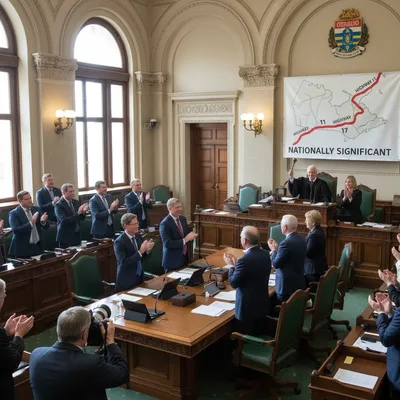
Mota added that by increasing capacity and improving the reliability of the power system, the project will not only support existing industries but also help attract new investment to Red Lake and surrounding areas. The effort is part of a broader provincial focus on northern development and infrastructure, which has included designating key transportation routes like Highways 11 and 17 as nationally significant.
The Ford government has been vocal about its priorities for 2026, which include strengthening the province's economy in the face of international pressures, such as tariffs from the United States. This energy project aligns with that agenda by aiming to secure the power supply for a key economic sector in the province.
Reconciliation and development
The government's push to fast-track development has not been without criticism. Some First Nation leaders, particularly in the mineral-rich Ring of Fire region, have voiced concerns that an accelerated approvals process comes at the expense of environmental protections and Indigenous rights.
When asked about these concerns, Minister Lecce countered that the Red Lake project is a "positive story of reconciliation in action." He pointed to the collaboration behind the project as a model for future development. "We have multiple chiefs, municipal leaders, industry, government coming together with one mission, which is building in partnership using every authority we have to keep our country strong and our grid clean," Lecce said. "This is the ultimate case study of partnership. I want to refute this premise that you cannot move with speed.” The government’s emphasis on rapid execution is a hallmark of its broader policy approach, which has seen significant, and sometimes controversial, changes in areas like education. The province has recently moved to overhaul school board governance, citing a need for financial accountability and efficiency, and similar issues have surfaced in higher education, where a Jewish student is suing Toronto Metropolitan University for $1.3M over alleged antisemitism.
First Nations partnership and energy sovereignty
A key component of the transmission line project is a partnership model for First Nations. The province announced that Hydro One’s First Nations equity partnership model will be available, offering communities a chance to hold up to a 50 per cent equity stake in the new transmission line once it is built.
Leaders from Wabauskang First Nation, Eagle Lake First Nation, Lac Seul First Nation, and Wabigoon Lake Ojibway Nation attended the announcement and spoke in favour of the project. Chief Bernadette Wabange of Eagle Lake First Nation emphasized the importance of balancing economic development with environmental stewardship for future generations.
This is part of it, is having that working relationship and building that respectful relationship with one another. Being able to have that discussion respectfully and openly without having to hold back, right?
Chief Clayton Wetelainen of Wabigoon Lake Ojibway Nation stressed the need for his community to be involved in energy projects on its territory. He linked this to the broader concept of "energy sovereignty," particularly in light of ongoing trade uncertainties between Canada and the U.S. "We have to start thinking about energy sovereignty and making sure our infrastructure and all our projects have suitable energy," Wetelainen told CBC News. He also highlighted the need for reliable power to support youth employment in the growing IT sector.
Broader energy initiatives
Alongside the Red Lake project, Lecce announced two other major energy initiatives. The new North Hydro Program will renew contracts for hydroelectric stations larger than 10 megawatts, securing over 1,000 megawatts of existing capacity, most of which is in northern Ontario.
Additionally, the government has directed the Independent Electricity System Operator (IESO) to launch a new procurement process for long-duration energy storage and new hydroelectric power. The goal is to secure up to 800 megawatts of capacity from storage and one terawatt-hour per year from hydro. Applications for this "Long-Lead Time procurement" will open on May 10, with the new projects expected to connect to the grid by May 2035.
These initiatives, combined with the fast-tracking of the Red Lake transmission line, signal a comprehensive strategy by the province to secure Ontario's energy future, with a significant focus on leveraging the resources and economic potential of its northern regions.