
Ontario's provincial legislature has unanimously passed a motion to officially recognize Highways 11 and 17 as roads of national significance, a move advocates say is a critical first step toward securing much-needed funding for safety upgrades along the vital northern corridors.
The motion, brought forward by Timiskaming–Cochrane MPP John Vanthof of the NDP, received all-party support at Queen’s Park following a persistent campaign to highlight the dangerous conditions and frequent closures that plague the two highways. These routes serve as the primary transportation arteries across northern Ontario, connecting communities, facilitating trade, and providing essential access for emergency services.
For years, northern residents and political leaders have called for improvements, arguing that the predominantly two-lane highways are inadequate for the high volume of commercial and passenger traffic they carry, leading to preventable accidents and economic disruption.
A ‘hard-fought win’ for northern communities
The unanimous vote marks a significant political victory for proponents of the upgrades, who have long felt their concerns were overlooked. The motion’s success follows a recent 10-day tour by northern NDP MPPs along the highways to bring provincial attention to the issue.
This is a hard-fought win for Northern communities who have long been asking for the safety they deserve. Highways 11 and 17 are lifelines for people, goods, and emergency services, yet they’ve been underfunded and overlooked for far too long.
Vanthof emphasized that declaring the routes as nationally significant is not merely symbolic. Instead, he framed it as a necessary measure to unlock investments that will enhance safety, improve reliability, and foster economic growth throughout the North. The highways are integral sections of the Trans-Canada Highway, a network that spans the entire country. However, the Ontario portions in the north remain notoriously underdeveloped compared to those in other provinces.
The push to four-lane the Trans-Canada

A major focus of the campaign is the call to widen the highways to four lanes, a standard that has been adopted across much of the Trans-Canada Highway in other provinces. Vanthof has pointed to the four-lane highways in Manitoba, Saskatchewan, and Quebec as examples that Ontario, Canada’s most populous and economically powerful province, should follow.
"Highways are a provincial responsibility, so if Manitoba can afford four lanes along with Saskatchewan and Quebec, it's kind of odd that the most populous province, the biggest economic power in the country, has never bothered," Vanthof said.
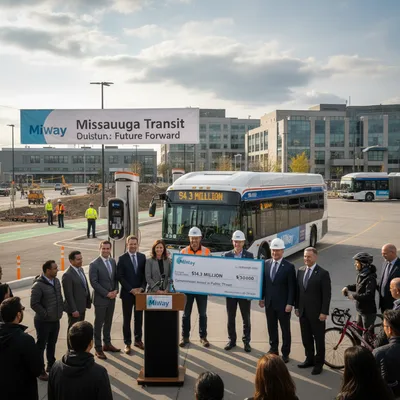
While road infrastructure is under provincial jurisdiction, designating the highways as nationally significant could help make the case for federal funding contributions through programs like the National Highway System. This shared funding model is often used for major infrastructure projects deemed critical to the national economy and interprovincial trade, such as the major public transit investments seen in southern Ontario cities like Mississauga. Similar issues have surfaced in Boston, where the mayor's budget cuts funding for dozens of street safety projects.
The economic cost of inadequate infrastructure in the north is substantial. When a section of Highway 11 or 17 is closed due to a collision or severe weather, transport trucks are often delayed for hours, if not days, disrupting supply chains across the country. For local residents, a closure can mean being cut off from essential services like hospitals or specialist medical appointments.
A long road ahead
The Legislative Assembly of Ontario, the province's unicameral parliament, has served the region since 1867. A unanimous vote in the chamber is a powerful statement, signalling that the need for action on northern highways transcends partisan politics. It reflects a shared understanding among all parties that the status quo is no longer acceptable.
Despite the political victory, supporters acknowledge that the path to completing the upgrades will be long and expensive. Historically, major highway expansion projects in the region have taken decades to complete. For instance, the four-laning of Highway 11 between Gravenhurst and North Bay was a process that spanned over 40 years. Given that Highway 11 alone is nearly 1,800 kilometres long, a complete overhaul represents a generational undertaking.
The focus now shifts from political recognition to tangible action and budget allocation. The motion puts pressure on the provincial government to prioritize the project in its long-term infrastructure plans and to begin negotiations with its federal counterparts. Critics of government spending priorities have previously pointed to expenditures like a since-sold $29-million government jet as examples of funds that could be redirected to essential services and infrastructure.
For the NDP and other northern advocates, the work is far from over. Vanthof affirmed their commitment to holding the government accountable to the motion’s intent.
“New Democrats have been clear: Northerners shouldn’t have to fight this hard for basic infrastructure,” Vanthof said.