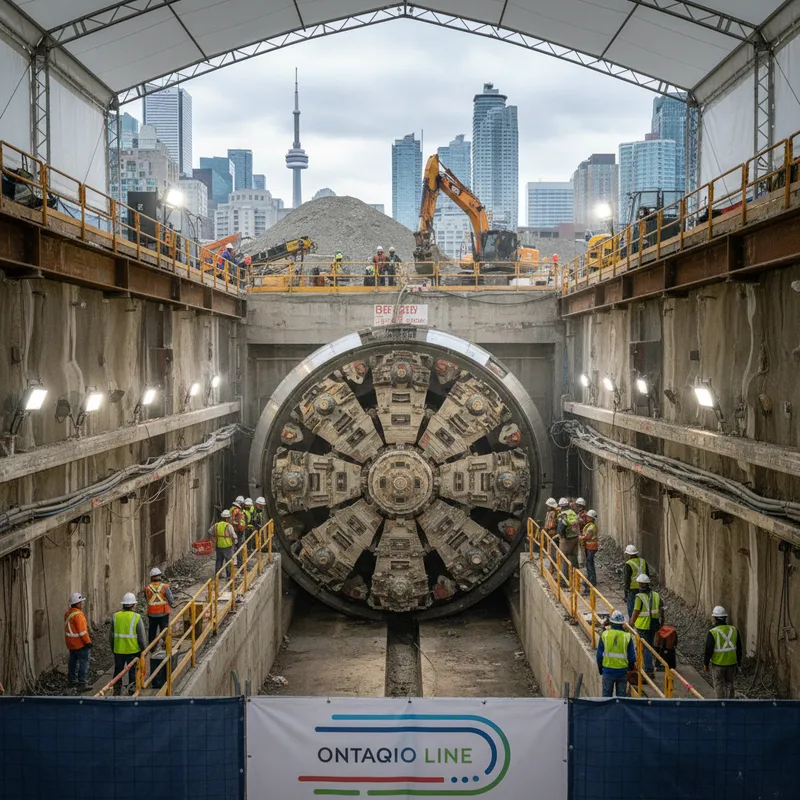
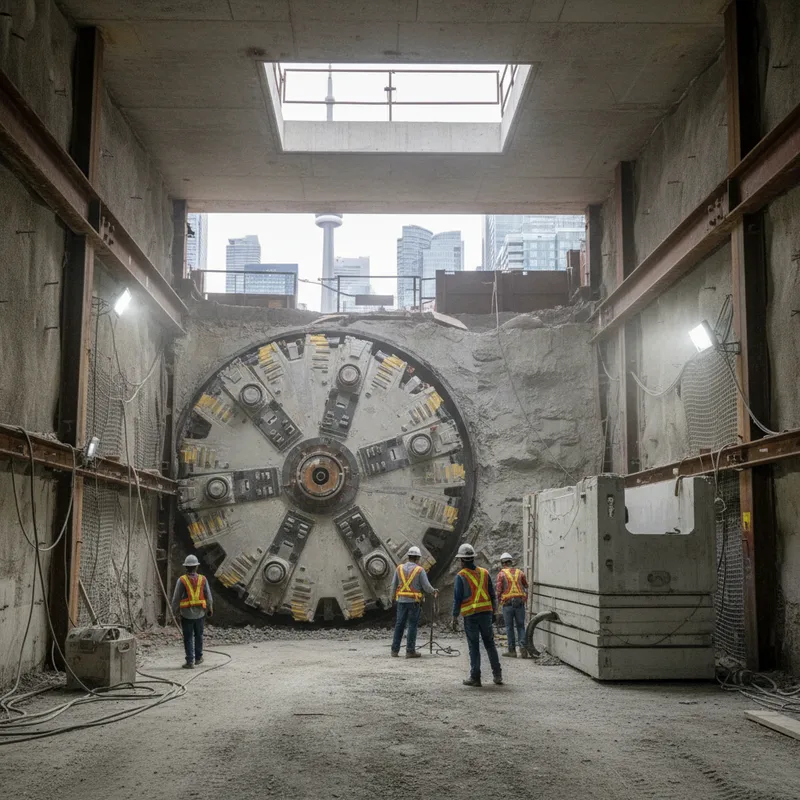
Crews have officially begun tunnelling the downtown Toronto section of the new Ontario Line, a 15.6-kilometre transit project years in the making. Premier Doug Ford, alongside Mayor Olivia Chow and federal ministers, announced the 'historic moment' at a news conference on Thursday.
Two massive tunnel boring machines, named 'Libby' and 'Corkie' after a public contest, will carve out twin tunnels 40 metres underground. They will start their journey at the Exhibition Station in the west and work their way towards the Don Yard, located near Lakeshore Boulevard and the Don Valley Parkway. These machines represent a critical step in a project designed to bring modern rapid transit to hundreds of thousands of Toronto residents.
"If we don't act now, too many people are wasting time in traffic," Ford said at the announcement, championing the project as a key solution to the city's gridlock. The Ontario Line is projected to reduce travel times for some commuters by as much as 40 minutes.
The line will feature a mix of underground and above-ground sections, with 15 stations planned. It will connect to more than 40 other transit routes, including GO Transit lines, the Eglinton Crosstown LRT, and the TTC's existing subway network. The new line is expected to provide transit access to nearly 230,000 people and support approximately 4,700 jobs during its construction.
A complex and lengthy undertaking
Despite the celebratory milestone, officials caution that the project remains a complex and long-term endeavour. Metrolinx CEO Michael Lindsay stated that while tunnelling has begun, it doesn't signify the start of 'major construction progress on the project' just yet. He highlighted the immense complexity of tunnelling through a dense, urban core, particularly near an active rail line that must remain operational.
The completion date for the ambitious project is currently slated for the 'early 2030s'. This timeline has drawn some scrutiny from provincial opposition parties, who are calling for greater clarity. The construction will continue to be visible across the city, with work on elevated sections stretching from the Don Valley Parkway to Thorncliffe Park also underway, which will connect the Pape Village neighbourhood to the transit line for the first time.
The Ontario Line represents one of the largest transit investments in the Greater Toronto Area's history. The project is a key part of the provincial government's multi-billion dollar expansion of the public transit system, an initiative that has seen both support and criticism, particularly regarding its cost. In a similar vein, the NSW government has also invested in public transport, the province has previously had to defend its spending on large-scale infrastructure projects, including expansions to the province's correctional facilities.
The history of transportation development in the province is long, with the Ministry of Transportation, originally the Department of Public Highways of Ontario, having been established over a century ago in 1916. Today's projects continue a long tradition of infrastructure expansion aimed at meeting the needs of a growing population.
All levels of government collaborate
The Ontario Line is being funded and coordinated by all three levels of government. The federal government has committed $4 billion to the project, its largest single transit investment in the GTA. "When governments work together, we build together and we build fast," said federal Minister Evan Solomon, who oversees federal economic development for Southern Ontario.
Mayor Olivia Chow also heralded the intergovernmental cooperation, calling the project a 'historic investment in public transit to fight gridlock, cut commute times and keep people moving across our city.' Chow has committed to keeping TTC fares affordable and improving service reliability. This project, along with others like the Waterfront East LRT, is seen as crucial to the future of Toronto's public transportation network, which is managed by the Toronto Transit Commission (TTC).
The complexity of this job is tremendous. The downtown tunneling work is near an existing rail line that has to keep providing service.
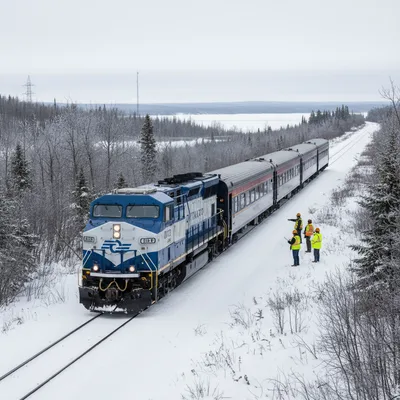
Work is already underway across the entire 15.6-kilometre route, according to Ontario's Minister of Transportation, Prabmeet Sarkaria. He called the start of tunnelling a 'major milestone' that brings the province closer to delivering a world-class transit system for the region. The project is also part of a wider provincial effort to improve regional transit, including the restoration of the Northlander train service connecting Toronto to communities in northern Ontario.
Looking ahead
As Libby and Corkie begin their slow and steady work beneath the city, Torontonians will see more visible signs of construction for years to come. The above-ground sections of the Ontario Line will see trains emerge from the tunnels at the Don Yard and travel across the Lower Don Bridge.
The project is not without its challenges. Experts have previously warned that digging through Toronto's downtown core will not be easy, and the experience with delays on projects like the Eglinton Crosstown LRT has made the public watchful of timelines and budgets. Metrolinx has also confirmed the line will feature protective platform doors, a safety measure the TTC has been considering for its own subway system.
For now, the focus is on the steady progress of the tunnel boring machines. As Minister Sarkaria noted, the start of tunnelling 'moves us another step closer to delivering world-class transit for people across the GTA while supporting thousands of good-paying jobs'.