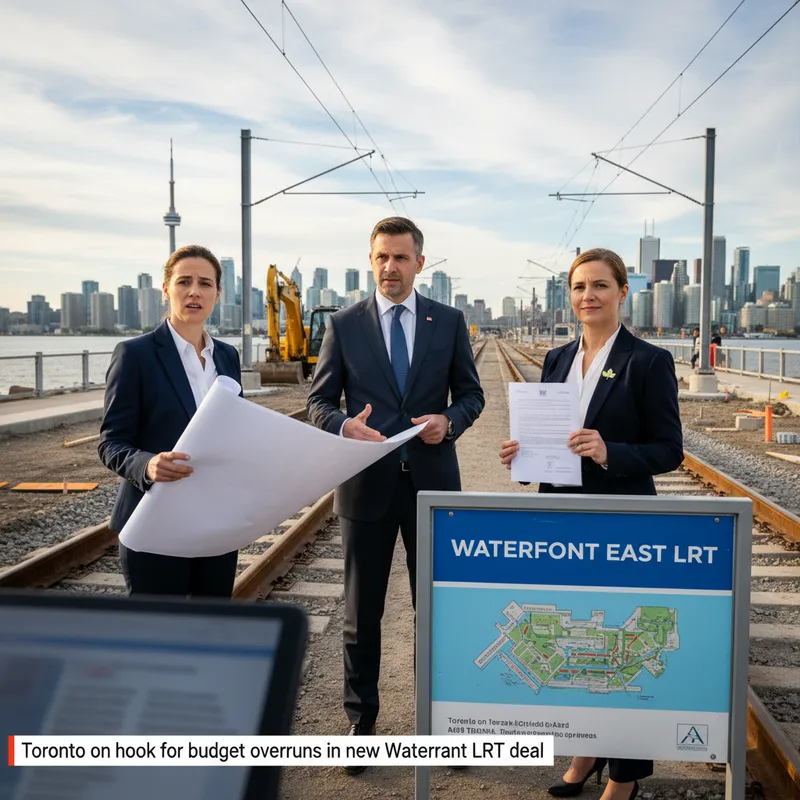
After decades of discussion and planning, Toronto has secured the funding to build the much-anticipated Waterfront East Light Rail Transit (LRT), but the celebratory announcement is shadowed by a critical detail: the city alone will bear the financial responsibility for any cost overruns.
In an agreement announced in early April, the federal, provincial, and municipal governments confirmed a three-way split for the project’s $3 billion price tag, with each contributing $1 billion. The 3.8-kilometre line is a crucial piece of infrastructure intended to connect Union Station to the city’s rapidly developing Port Lands, with a target completion date in the early 2030s.
However, the agreement released by the province stipulates that its financial commitment, along with Ottawa's, is capped. Any expenses beyond the initial $3 billion budget will fall to the City of Toronto, which is already grappling with a significant state-of-good-repair backlog for its existing infrastructure. The city was first directed to begin design work with Waterfront Toronto and the TTC back in 2019.
The stipulation raises alarms given the recent history of major transit projects in the city. The Eglinton Crosstown (Line 5) and Finch West (Line 6) LRTs, both managed by the provincial agency Metrolinx, ran a combined total of billions over budget, creating years of construction delays and public frustration.
Cost overruns a 'serious concern' for city councillor
The financial arrangement has drawn sharp criticism from some at city hall. TTC board member Coun. Josh Matlow voiced apprehension about the potential burden on Toronto taxpayers, arguing the transit line will serve the wider Greater Toronto Area.
I have very serious concerns about how this agreement has been put together. I have real concerns that Toronto is seen as a source of revenue for the provincial government rather than Ontario's capital city that needs support and investment by the province.
In response to questions about why the mayor agreed to such terms, press secretary Braman Thillainathan stated that the project is in its early stages and has no current overruns. "What is true as of right now is that we are $2 billion further ahead, and the Waterfront East LRT can now actually be built, due to the Mayor's work," Thillainathan said.
In a departure from previous projects, Ontario’s Transportation Minister, Prabmeet Sarkaria, confirmed that the provincial agency Metrolinx will not lead the construction. While Sarkaria has indicated the TTC will helm the project, the city's own transportation expansion department has been providing updates to council, leaving the ultimate leadership structure to be clarified at a later date.
'Astronomically high' price tag raises questions
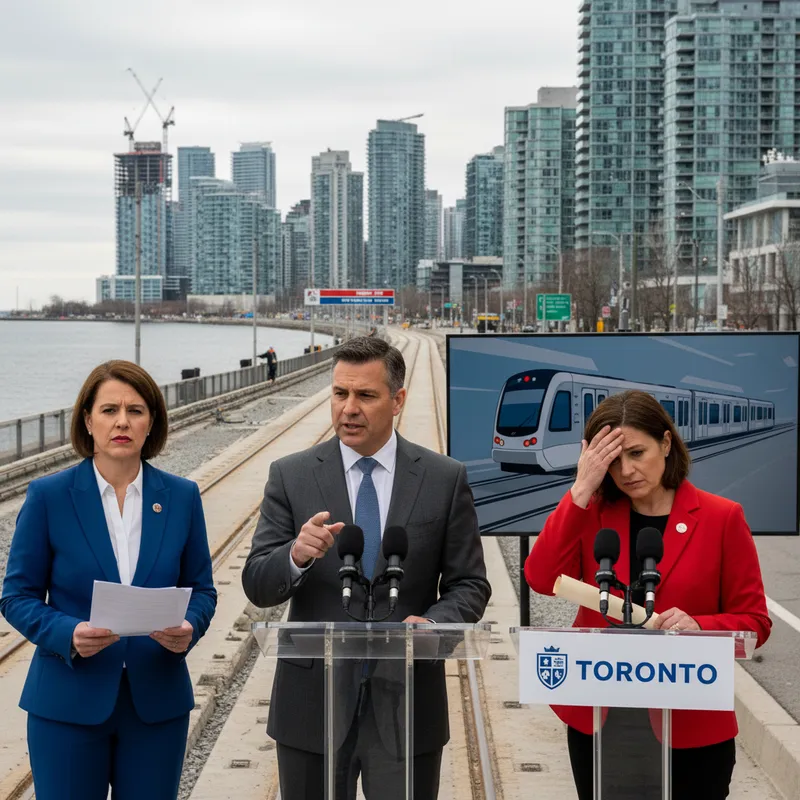
Even without potential overruns, the project’s initial cost is staggering. At $3 billion for 3.8 kilometres, the price averages out to $789 million per kilometre, a figure that transportation consultant Jonathan English calls “astronomically high.”
English, who recently authored a report on Canadian transit infrastructure costs, notes that a significant portion of the expense will likely come from the complex work of integrating the new line with the existing hub at Union Station. He says that while it’s standard for upper levels of government to refuse liability for overruns on projects they don’t directly manage, the clause creates a powerful incentive for the city.
“This is a way to make sure that the city, as it delivers this project, tries to keep as firm a hand on keeping costs from going up as possible,” English said in an interview.
The concern is not just theoretical. Large-scale public transit projects are notoriously complex, involving everything from tunnelling near existing foundations to relocating vast networks of underground utilities and negotiating with countless stakeholders. The precedent set by other major Canadian transit undertakings, like Melbourne\'s airport rail link, shows that massive budgets and multi-year timelines are the global norm for transformative infrastructure.
Lessons from past projects could be key
While cost overruns are common, English insists they are not inevitable. He points to Ontario’s own history with large-scale projects as a source of optimism, highlighting the province’s experience with nuclear reactor refurbishment. A 2010 restoration went $2 billion over budget, but the more recent Darlington plant refurbishment was completed this year at $150 million under budget, demonstrating an ability to learn from past failures.
“I think that there are a lot of opportunities to learn lessons from successful projects,” English said. The key will be whether the city and its partners can apply the hard-won lessons from the Eglinton Crosstown and other challenging builds to keep the Waterfront East LRT on track financially.
The project is seen as vital for unlocking the potential of Toronto’s eastern waterfront, a post-industrial area undergoing a massive revitalization. The new LRT will provide essential transit for thousands of new residents and workers in the Port Lands and East Bayfront neighbourhoods, connecting them seamlessly to the city’s primary transit hub.
As the Northlander train undergoes testing for its return to service, the Waterfront LRT represents another major investment in Ontario’s transportation network. However, with tensions already present between GTHA transit unions and the province, the question of who pays when things go wrong remains a sensitive political issue. For now, the Waterfront East LRT is moving forward, but with a significant financial risk resting squarely on the city’s shoulders. The project is scheduled for completion in the early 2030s.