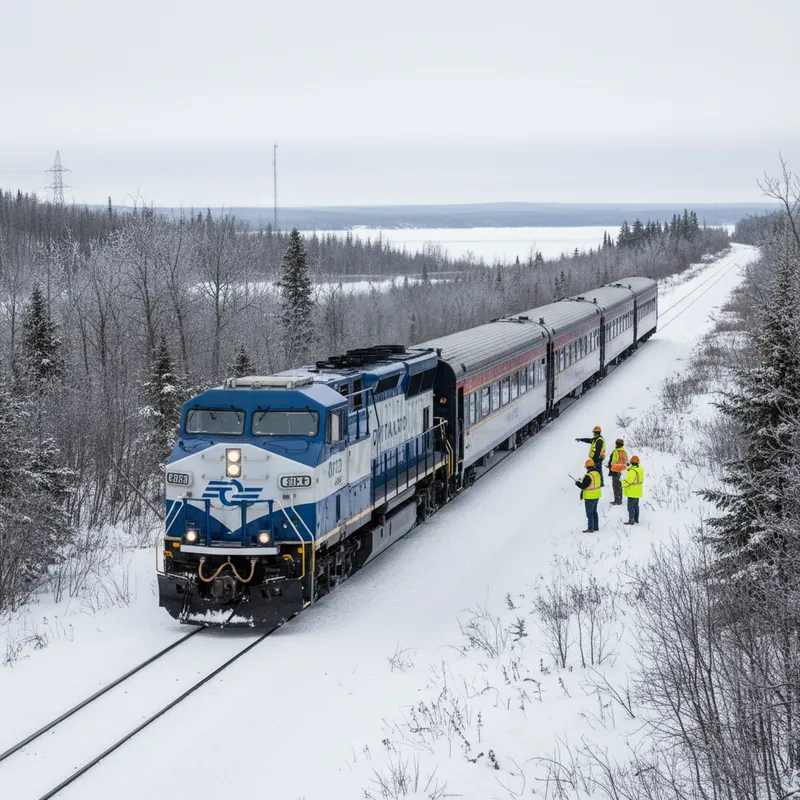
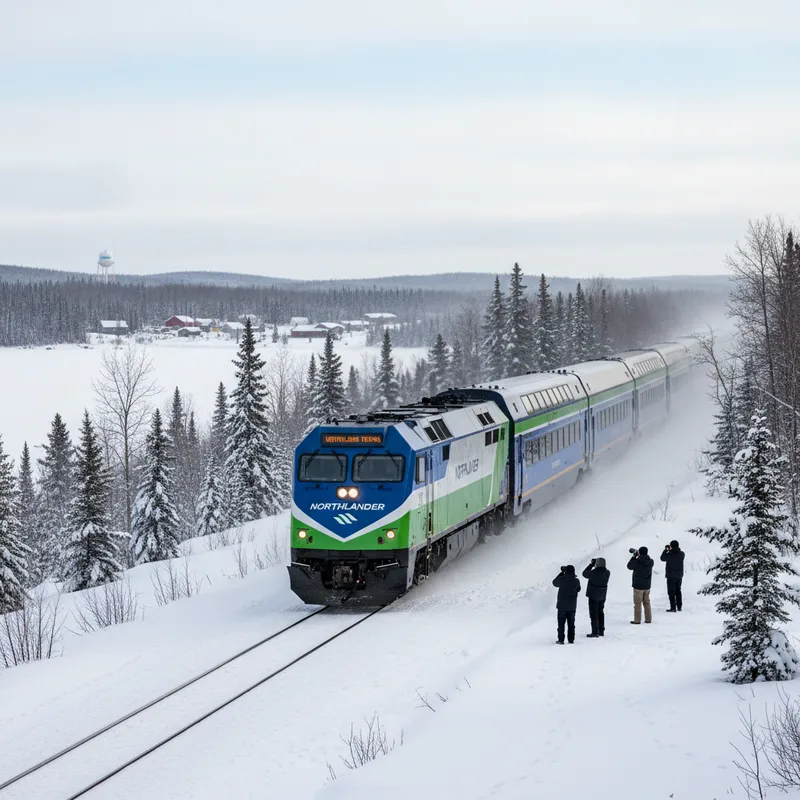
The Northlander passenger train is one step closer to returning to the rails of Northern Ontario, as the province announced Tuesday that the service has entered a critical testing phase. Premier Doug Ford, speaking in North Bay, marked the milestone, which signals the final stage before service resumes later this year, 14 years after it was cancelled by the previous Liberal government.
The train, a key project in the province's $70 billion transit investment plan, is undergoing months of rigorous evaluation along its entire route, stretching from Toronto’s Union Station to Timmins and Cochrane. The return of the Northlander has been a long-standing promise of the Ford government, aimed at bridging the transportation gap for northern communities.
“For the first time in 14 years, the Northlander is back in Northern Ontario,” said Premier Doug Ford. “When it returns to service later this year, the Northlander will connect people across Northern Ontario to life-changing opportunities, school, vital medical appointments and more, while strengthening local towns and industries along the entire route.”
Final stages of testing underway
The first of two new trainsets has already completed its initial "burn-in" testing, a process that involved travelling more than 1,600 kilometres in simulated service conditions. According to Ontario Northland, the train will now proceed to the "Revenue Service Demonstration" phase. This involves training staff, running emergency exercises, and testing schedules and station operations to ensure all systems are fully functional and safe for public use.
During this period, residents along the 740-kilometre corridor may see the new train making stops and hearing station announcements as crews simulate a regular operational day. The second trainset, which arrived in Ontario last month, will soon commence the same testing process. The province has stated that a confirmed launch date will be announced in the coming months as these final evaluations conclude.
The new trainsets, built by Siemens, each feature 169 seats, accessible washrooms and seating, wide aisles, and charging ports for electronic devices. The restoration of the service also required significant track upgrades, with the province investing over $100 million in rail infrastructure north of North Bay to prepare for the new passenger trains.
With this critical stage of testing and commissioning underway, our government is officially on track to deliver reliable and affordable Northlander rail service later this year. This new transportation corridor will make a real impact on the lives of families and workers across Northern Ontario by expanding access to new economic opportunity and health-care services, and we could not be more proud or excited to see it in action.
Connecting communities and economies
The Northlander route will include 16 stops, connecting Toronto with communities such as Gravenhurst, Bracebridge, Huntsville, North Bay, Temagami, and Timmins, with a rail connection to Cochrane. The original Northlander service, which first launched in 1977, was a vital link for the region before its controversial cancellation in 2012 left many without a viable long-distance travel option.
Local leaders across the north have championed the project's return, citing its potential to boost local economies, support tourism, and provide essential transportation for residents. In Northern Ontario, where over 65,000 local businesses contributed more than $55.5 billion to the province's GDP in 2024, reliable transportation is seen as critical infrastructure.
“The return of the Northlander is generating real excitement across Parry Sound. Muskoka,” said Graydon Smith, MPP for Parry Sound. Muskoka. “It will help strengthen the local economy and give people another convenient option to travel south to Toronto or north to Timmins.” This renewed focus on regional rail comes as other major projects, like a proposed Eglinton Line 5 LRT opening, gain support, reflecting a broader push for improved passenger train services across the province.
Addressing fares and accessibility
The government has also released its anticipated fare structure for the new service. Ticket prices will be set approximately 10 per cent higher than the existing Ontario Northland bus service. Officials stated this pricing model is intended to be competitive and accessible while reflecting the higher cost of operating a more comfortable and reliable passenger rail line.
A significant challenge for the service is the "first- and last-mile" issue, acknowledging that many northern communities lack local transit, taxi, or rideshare options to get passengers to and from the train stations. To address this, the government recently introduced legislation that would create a Northern Rideshare Framework.
The framework, part of the Building Homes and Improving Transportation Infrastructure Act, would give municipalities new tools to support the growth of local rideshare services. “Reliable access to and from stations will be key to the service’s success,” said Dave Plourde, President of the Federation of Northern Ontario Municipalities (FONOM).
“As we move into revenue service demonstration, Ontario Northland is focused on ensuring the equipment meets all safety and performance requirements and that staff are well-prepared to welcome passengers later this year,” said Chad Evans, Chief Executive Officer of Ontario Northland.