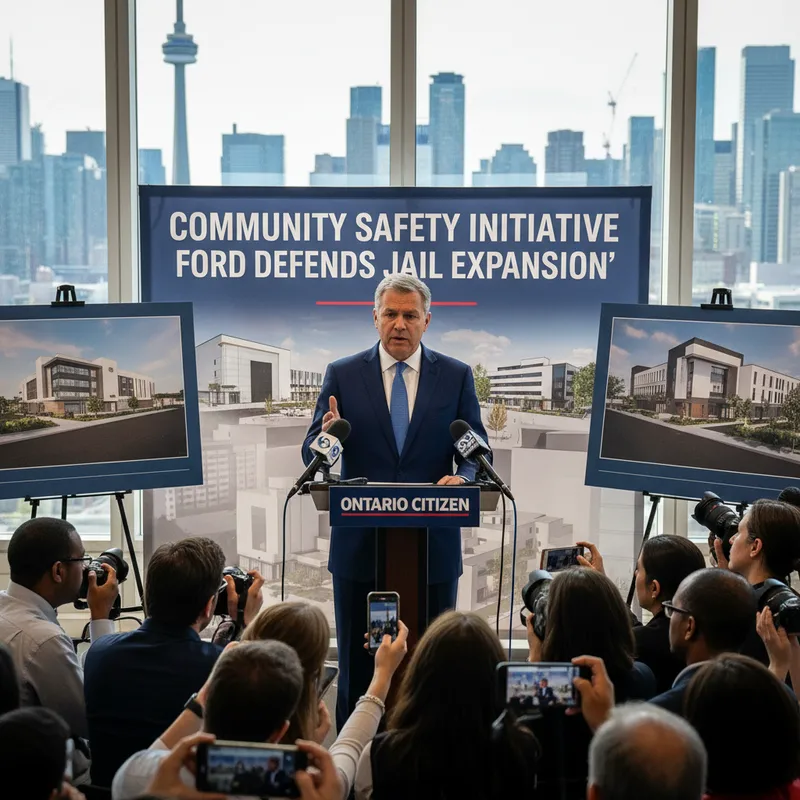
Ontario Premier Doug Ford is defending his government’s multi-billion-dollar plan to build thousands of new jail spaces, arguing the staggering cost is a worthwhile investment to keep communities safe. The announcement comes as the province’s correctional facilities grapple with a severe and worsening overcrowding crisis that has seen the inmate population swell far beyond official capacity.
The Progressive Conservative government’s strategy involves adding more than 6,000 new jail beds by the year 2050, according to internal documents obtained by The Canadian Press. Ford remained defiant in the face of questions about the fiscal prudence of this long-term construction project, emphasizing a tough-on-crime approach.
"We aren't building Four Seasons hotels for these people, they're going to jail, and again, I don't care if you stack them 10 high," Ford said on Tuesday. "These are criminals that broke the law and they're going to be held accountable. Those billions of dollars is well invested to make sure our communities are safe." The province proposes cutting TDSB trustees by nearly half
The premier also framed the expansion as a direct message to the judiciary. "We want to send a message to the judges: don't hold back, send them to jail, and we're going to take care of them," he said.
A system at its breaking point
The government’s plan is a direct response to a correctional system under immense strain. Internal documents prepared for Solicitor General Michael Kerzner, obtained through a freedom-of-information request by University of Ottawa researchers, reveal a system with about 2,000 more inmates than its official capacity of 8,500 beds.
Recent data from October 2025, reported by Global News, shows the situation has intensified, with provincial jails operating at 130 per cent capacity. This marks a significant increase from the 113 per cent capacity reported in 2023. The majority of Ontario’s correctional institutions are now filled beyond their limits.
A critical detail within this crisis is the composition of the inmate population. Approximately 80 per cent of individuals in these provincial jails are on remand, meaning they are awaiting trial and are presumed innocent. These facilities hold people who have been accused of a crime but denied bail, alongside those serving sentences of two years less a day. Those with longer sentences are housed in the federal prison system.
Ministry documents attribute the overcrowding to a "complex" mix of factors, including significant backlogs in the court system, an increase in the length of time inmates remain in custody, recent bail reforms, and general population growth across Ontario.
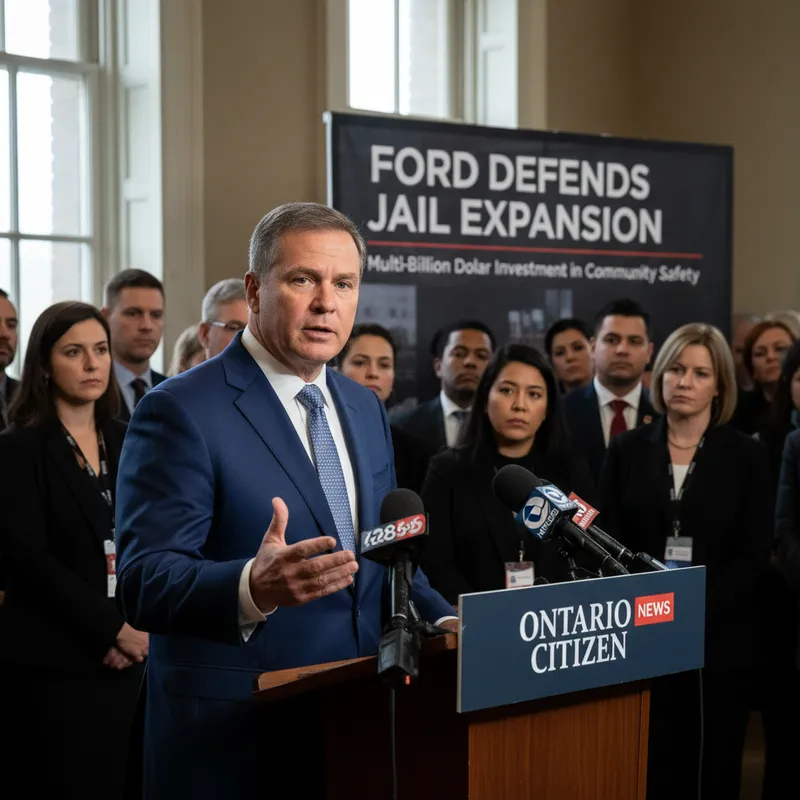
Critics condemn ‘multi-billion-dollar boondoggle’
The price tag for the expansion is substantial. A new 375-bed facility currently under construction in Thunder Bay is projected to cost $1.2 billion. Furthermore, the 1,140 beds the province is currently building come with a combined cost of approximately $4 billion. Opposition parties and academic experts are questioning the logic of funnelling billions into incarceration rather than addressing the root causes of crime and court delays.
The province's plan should be seen for what it is. a radical, multibillion-dollar boondoggle that'll line the pockets of Premier Ford's friends in construction and the prison-industrial complex while depriving our communities of supports that actually make us safer.
Critics argue that the government’s focus is misplaced. "The government has completely failed to address overcrowding in jails because of their underinvestment in our court system, and as a result, a number of hardened criminals are getting out because of it," said Green Party Leader Mike Schreiner. He pointed out the irony that poor jail conditions, like frequent lockdowns caused by overcrowding and staff shortages, often result in reduced sentences for convicted individuals, as judges grant extra credit for time served under such harsh conditions.
This sentiment was echoed by other opposition leaders, who advocate for what they term "upstream solutions."
Calls for investment in courts and community support
NDP Leader Marit Stiles argued that the government should focus on clearing the province's clogged court system to ease jail populations. "Our jails right now are deeply overcrowded, and that's not safe for inmates or for correctional officers," she said. "I just question why this government never seems to look at any of the upstream solutions around community safety."
Liberal justice critic Lucille Collard suggested the funds would be more effective elsewhere. "Building more jails and putting people in jails will cost the government and taxpayers more money than if they would build supportive housing and treatment centres to help people," Collard stated.
The debate over the jail expansion highlights a fundamental disagreement on the best path toward public safety. While the Ford government champions a punitive, law-and-order approach, its critics push for greater investment in social infrastructure and the justice system itself. This major spending commitment on corrections comes at a time when the government is making other controversial financial decisions, such as a recent pay raise for MPPs and changes to post-secondary education funding.
As the government moves forward with its three-phased construction plan, the enduring crisis in the province’s jails and the debate over how to solve it show no signs of abating. The opposition continues to call for a focus on rehabilitation and judicial efficiency, while the Premier remains steadfast in his commitment to building more cells.