
Ontario’s Progressive Conservative government will table its eighth budget on Thursday.
It lands as unemployment stays high, tariffs drag on key industries and Queen’s Park braces for protests.
MLAs return Monday for a shortened spring sitting after the legislature resumed a month later than usual. The government delayed the start of the session and will open it with the annual spending plan on March 26.
Premier Doug Ford says the focus will stay on jobs and economic protection, as global uncertainty grows around the war in Iran and continued U.S. tariffs. Those pressures arrive as Ontario’s jobless rate has been rising steadily since mid-2023.
When is ontario’s 2026 budget and what will it focus on?
Ford set the tone last week by tying the budget to paycheques and trade. “It's all about protecting communities, protecting their jobs,” Ford said. “It's about the economy, making sure people can bring home a paycheque. It's absolutely critical.”
He also signalled the government expects the trade dispute to stretch on. “And this tariff fight isn't over,” he said.
The budget will be delivered by Finance Minister Peter Bethlenfalvy, following a fall economic statement in November. The government has not yet detailed whether it will extend, replace, or wind down its previous round of tariff supports.
Last year’s plan included $14 billion in tariff relief, largely through tax deferrals meant to improve company cash flow. Those measures came as the tariffs were linked to tens of thousands of layoffs in the auto, steel and aluminum sectors.
Ontario has also pitched longer-horizon industrial bets, including Ring of Fire development and small modular nuclear reactors. The government has framed them as economic backstops if trade conditions worsen.
Will the budget include new tariff relief for ontario businesses?
Former Ontario chief economist Brian Lewis expects the budget will lean heavily on a contingency fund, to leave room for fast-moving shocks. That cushion matters with continued tariffs and tense CUSMA renegotiations expected this summer.
“I think one of the key things I will be looking for in the budget next week is how much of a prudence cushion have they worked in,” Lewis said.
Ontario built a $2-billion contingency into the 2025 budget, on top of tariff relief. Lewis said a similar, or larger, backstop would signal the province is preparing for more volatility in trade and investment.
Federal policy will also shape Ontario’s choices, because cuts or delays in Ottawa can shift costs onto provinces. The federal government has already flagged restraint, including plans outlined in Federal departments plan 12,000 job cuts through 2028-29.
Readers can also track the federal context in Finance Canada materials, which outline national economic assumptions that affect provincial revenue forecasts.
How big is ontario’s deficit and will ford still balance the budget?
Ontario ran a deficit of more than $13.5 billion last year. It projects the province will be nearly $8 billion in the red this year, before returning to surplus next year.
That fiscal path was supposed to lead to a balanced budget by 2027-28. Lewis said the government may need to stretch that timetable if tariffs, unemployment and other risks persist.
“I think the most likely thing is (they’ll need) a bit more time to get back to balance,” Lewis said. “The reason they'll offer is, ‘we needed to invest more money in people and the economy in these troubled times.’”
Ontario’s independent fiscal watchdog has also warned the province is unlikely to balance during Ford’s third term. The watchdog has said the government assumes lower spending in areas like health care and higher revenues than the Financial Accountability Office projects.
I think the most likely thing is (they’ll need) a bit more time to get back to balance. The reason they'll offer is, ‘we needed to invest more money in people and the economy in these troubled times.’
Conservative strategist Sam Duncan, a former Ford staffer, said economic uncertainty will test the government’s affordability pitch. He said voters will judge the province on day-to-day costs as well as job security.
“Voters are going to really start to look at governments and ask ‘what have you done?’” Duncan said. “But as people's paycheques and people's jobs are [in trouble], expectations of the government are raised.”
What affordability measures has ontario announced before budget day?
Former Liberal cabinet minister John Milloy said the government will use both the budget and legislation to show progress on cost-of-living pressures. He said the province is trying to highlight quick, visible actions after a year dominated by tariff messaging and long-term projects.
Milloy pointed to recent announcements, including $750 teacher spending cards for classroom supplies, proposed changes to high occupancy vehicle lane rules, and further alcohol retail liberalization.
“It may be very cynical to say, but these kind of ‘in your face small’ measures may be politically important,” Milloy said.
Those alcohol changes connect to a wider debate about how Ontario regulates public events and consumption. The province’s direction is also reflected in Ontario moves to expand bring-your-own alcohol permits.
Milloy said affordability pressures remain acute. “The cost of living is out of control. We still have huge issues in health care and housing, and we haven't seen the success that Mr. Ford offered … where are the affordability policies that are coming forward?”
Why are protests expected at queen’s park this week?
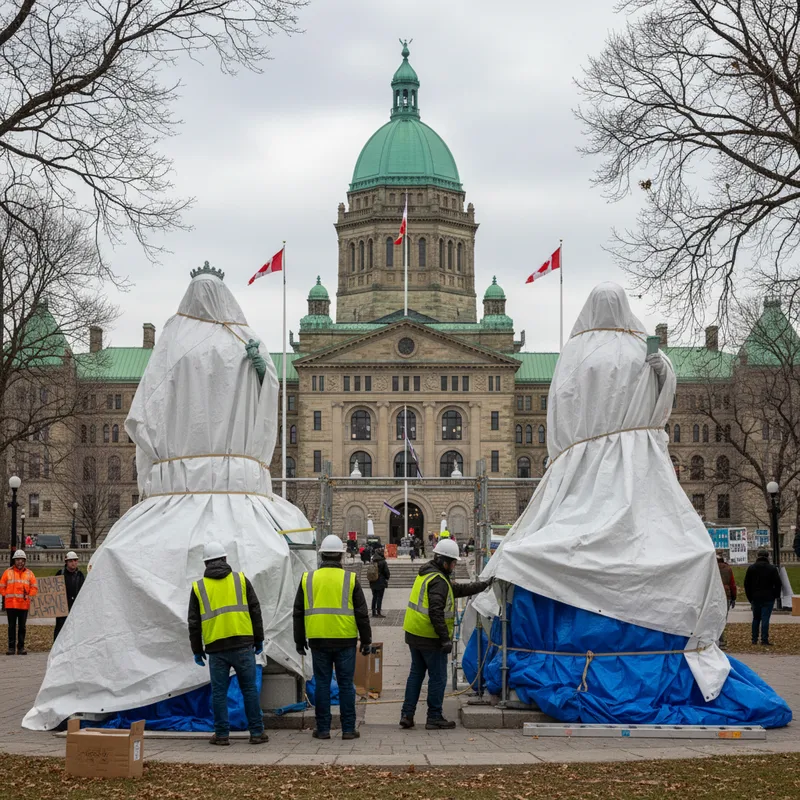
Legislature staff have prepared for demonstrations on the grounds of Queen’s Park as the session resumes. Workers wrapped eight statues outside the building to reduce the risk of damage during protests.
A George Brown monument was defaced during a protest over changes to the Ontario Student Assistance Program, and crews took days to clean it. Speaker Donna Skelly said restoring it cost taxpayers $5,000.
Green Party Leader Mike Schreiner urged demonstrators not to vandalise the grounds. “I would say to folks, let's not do any damage .. statues around the legislature, taking precautions around that, I think, is a prudent move,” Schreiner said.
He also tied the unrest to broader dissatisfaction with the government. “But we would not be in this position if we had a government that actually put everyday people ahead of the wealthy and well-connected."
Student anger over financial aid has been one flashpoint, after hundreds protested at Queen’s Park earlier this month. Ontario Citizen has also tracked the issue in Ontario students walk out over provincial OSAP grant cuts.
How will ontario’s freedom-of-information changes affect the spring session?
Another expected fight this spring centres on freedom-of-information rules. The government says it will introduce legislation that would exempt the premier’s office, cabinet, parliamentary assistants and their staff from FOI requirements.
University of Ottawa political science professor Geneviève Tellier said the move will draw concentrated opposition attention. “Doug Ford wants to shield himself from scrutiny and wants to protect some communication about policy from being published,” she said.
Tellier framed the change as a test of transparency. “This is worrisome. It’s about accountability,” she said.
The government will return to the legislature Monday, with the budget set for Thursday, March 26.