Ontario plans to let people bring their own alcohol to more outdoor public events this summer.
Premier Doug Ford says the change would make it easier to have a beer or glass of wine at a neighbourhood festival. The province says municipalities will decide which events qualify.
What the new BYOB permits would allow in ontario
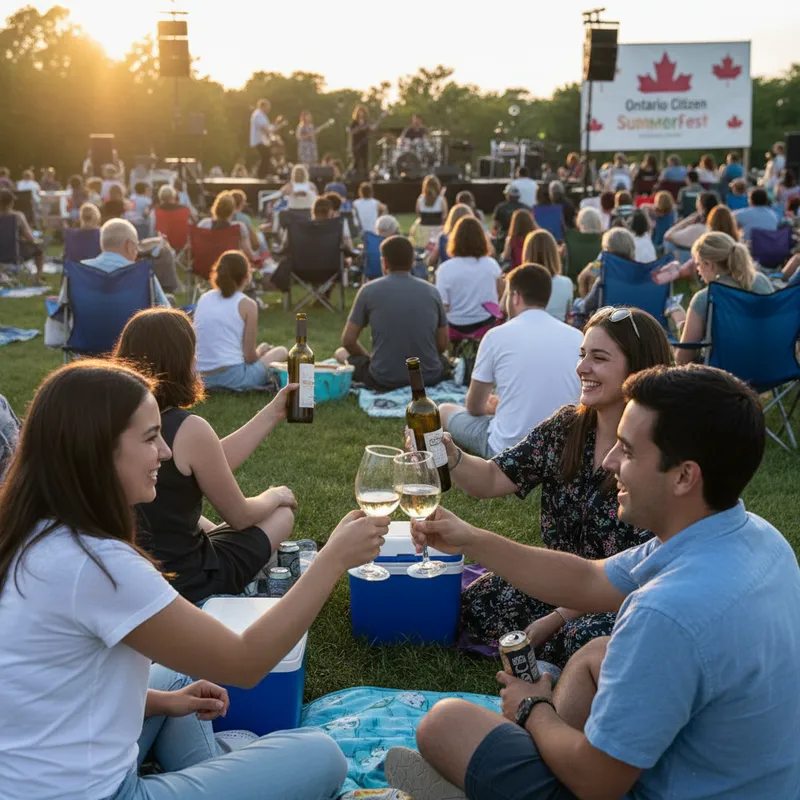
The government says it will expand “bring-your-own” event permits for municipally designated cultural or community outdoor public events. The permits would allow people to bring their own alcohol and drink it in designated areas.
Qualifying events could include farmer’s markets, outdoor movie screenings, art exhibits and neighbourhood festivals. Until now, the province has limited these permits, once called tailgate permits, to live sporting events.
Ford framed the policy as a small change that matches how many people already spend time outdoors. “What we’re saying is, if you want to go to a park, if you want to go to a cultural event, then you can have a glass of wine and a beer. You want to bring your own wine, that’s fine,” Ford said.
When the rule change could take effect
The province says the change should take effect this spring. It plans to amend a regulation under the Liquor Licence and Control Act.
Event organizers in participating municipalities will be able to apply for the permits through the Alcohol and Gaming Commission of Ontario starting April 30. The AGCO sets conditions for licensed events and enforces rules for liquor sales and service across the province.
Residents should not assume every outdoor gathering will qualify. The province describes the permits as tied to “cultural or community outdoor public events” that municipalities designate, with drinking limited to approved areas.
How cities and towns would decide which events qualify
Municipalities will carry the first burden of the change. The province says a municipality must pass a bylaw authorizing alcohol consumption in public if it does not already have one.
Local councils would also need a process to determine whether an event qualifies as a community or cultural event. That puts the definition work, and likely the public debate, at city hall.
Toronto already runs an alcohol-in-parks program that allows people to consume their own alcohol in many parks. The city program does not let people drink their own alcohol at festivals and cultural events, which is the gap the province now aims to address.
What toronto mayor olivia chow and doug downey said
Toronto Mayor Olivia Chow says she wants to see details, but supports expanding options for residents. “If the province wants to make an exemption that drinking in public space is allowed in big public event, then that’s up to the premier,” Chow said.
Chow also raised the impact on vendors who rely on sales during festival season. She said she hopes people will still support local businesses that are part of the events.
Attorney General Doug Downey pitched the permits as a cost measure for both residents and organizers. He said the ‘bring-your-own’ event permits will help save attendees money, lower overhead costs for event organizers and “contribute to local economies.”
Ford says he does not believe the policy would necessarily cut into festival organizers’ profits. Organizers often pay to set up licensed bars, hire trained servers and meet insurance requirements, but the province has not released a breakdown of how costs might shift.
What critics say about the timing at queen’s park
Ontario NDP Leader Marit Stiles says she does not object to the idea itself. She accused Ford of using the announcement to change the channel after the government moved last week to keep records from the premier’s office and cellphone secret.
“He is pressing the booze button and the safety button. He’s talking about traffic again, because it’s always what’s on his mind when he’s trying to distract from the things that are really bothering people in Ontario,” Stiles said.
Stiles tied her criticism directly to access-to-records fights at Queen’s Park. “I think everything he said in the last few days is all about distracting from the fact that he doesn’t want people to have access to his cell phone records because he’s trying to hide something.”
What this could mean for summer festivals and community events
For municipalities, the change adds a new policy decision before festival season ramps up. Councils will need to weigh crowd management, policing, litter control and the boundaries of designated drinking areas.
Organizers will face their own trade-offs. Allowing BYOB could reduce the need to run beer gardens, but it could also change how sponsors and food vendors price booths and how festivals cover security and insurance.
The province has not said whether it will require extra signage or standardized wristband systems. It also has not said whether municipalities can cap attendance for events using the permits.
Ontario’s rules on public drinking already vary by city, which could produce a patchwork of decisions. A family-friendly movie night in one community might include a BYOB zone, while another council could reject it outright.
Many of the events listed by the province match the kinds of free or low-cost programming cities use to draw people into parks and main streets. Ontario Citizen has tracked similar municipal programming, including March break fun listings that rely on parks and community spaces.
Festival planners also build around fixed dates and recurring permits, which makes spring regulatory changes tricky. Event calendars, such as London Ontario events guides, often lock in details months in advance.
Public agencies will also watch for knock-on effects on policing and safety plans. Ford’s government has repeatedly used regulatory tweaks to signal it is focused on day-to-day affordability, even when critics call the moves distractions.
Outside Ontario, cities have wrestled with similar questions about managing public drinking in shared spaces. Auckland’s debate over event rules and public facilities shows how quickly such policies can become political, as seen in this Auckland library backlash report.
For readers looking for the legal framework, Ontario posts statutes and regulations through Liquor Licence and Control Act resources on the provincial website. The province says its change will come through a regulation amendment under that act.
The first permit applications under the expanded program will open April 30 through the AGCO.