

Ottawa is preparing to shed more than 12,000 federal jobs over three years.
The cuts appear in 2026-27 departmental plans tied to the Carney government’s spending review. The reductions are measured in full-time equivalents, which can include multiple part-time roles.
How many federal jobs are being cut, and when?
Rola Salem, a spokesperson for the Treasury Board of Canada Secretariat, said departments were asked to outline savings for each fiscal year through 2028-29. She said the reports had to describe how savings would be achieved, the number of full-time equivalent reductions, and measures not included in the last budget.
The expected reductions include 1,793 positions at Public Services and Procurement Canada, 900 at Statistics Canada, and 942 at Health Canada.
The government has not provided a single, line-by-line account of how every cut will land in frontline services. Former senior public servants and opposition MPs say committee hearings will be where the details emerge.
Which departments face the biggest staffing reductions?
Public Services and Procurement Canada carries one of the largest planned reductions, with 1,793 positions flagged. The department also says it is winding down activities of the Canada General Standards Board and reducing funding for Laboratories Canada.
Statistics Canada’s plan includes 900 fewer full-time equivalent positions. Health Canada’s plan includes 942.
For Ontario residents, the changes may be felt through everything from federal procurement timelines to how quickly government data products are updated. That includes stats used by municipalities and small businesses for planning.
What programs are being wound down or cancelled?
Some departments put specific program decisions on the record. The Canadian Space Agency said it plans to terminate work on the LEAP Lunar Rover Mission.
The Canada Revenue Agency said it plans to wind down business units no longer connected to government priorities. It pointed to units that processed the Digital Services Tax and consumer carbon pricing.
The Canadian Food Inspection Agency said it is reducing “non-core research activities” and consolidating laboratory services. It said the goal is to focus on essential testing and avoid costly upgrades.
The agency also said it is decommissioning some vehicle washing stations. It said it is winding down functions no longer required to address health risks linked to the trade in pets.
Environment and Climate Change Canada says it is reducing the Low Carbon Economy Fund. Agriculture and Agri-Food Canada says it is winding down some programs outside its core mandate, including the Agricultural Climate Solution Living Labs program.
National Defence’s plan says the military will retire selected fleets that are near end of service lives, have rising sustainment costs, or no longer align with operational requirements. It also says it will sell or lease “underutilized, obsolete or surplus” properties.
Library and Archives Canada says it is gradually reducing Access to Information and Privacy functions and proactive review of historical records over three years. It is also discontinuing funding for the Documentary Heritage Communities Program.
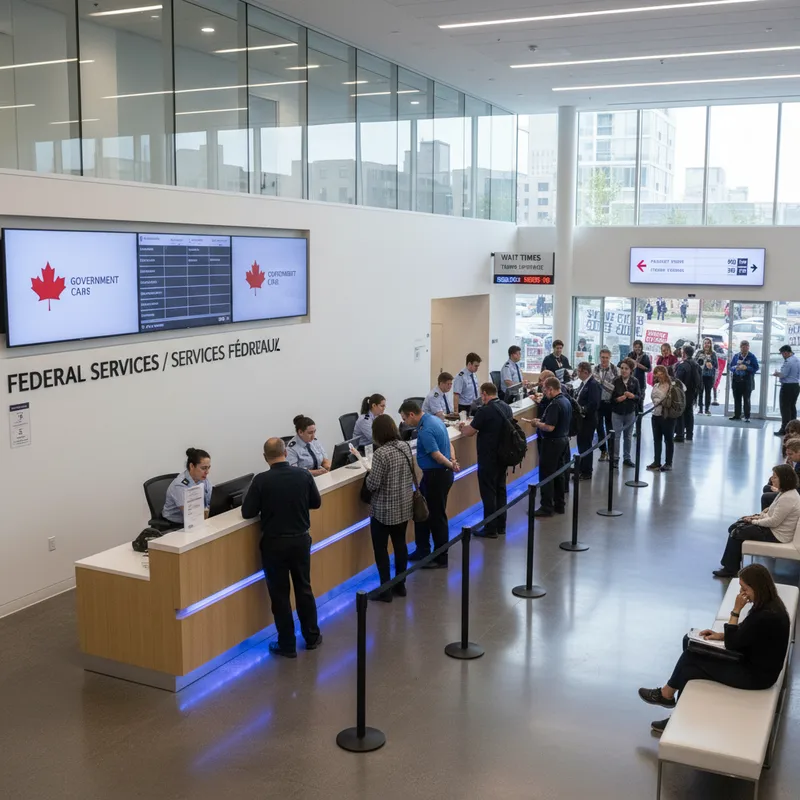
Will service levels change in ontario communities?
David McLaughlin, former president and CEO of the Institute on Governance, said the plans offer “broad strokes” and only “some transparency” about the impacts. He said it is still too early to know how this will affect people in different regions and demographics.
“You can't tell … at this moment, at this stage, what will be the actual impact of that in terms of a service on the ground to certain people, certain demographics or in certain regions,” McLaughlin said. “It's going to have to come through the detailed committee hearings.”
You can't tell … at this moment, at this stage, what will be the actual impact of that in terms of a service on the ground to certain people, certain demographics or in certain regions. It's going to have to come through the detailed committee hearings.
Michael Wernick, former clerk of the Privy Council, said the departmental plans “set the table” for parliamentary review. He said MPs will press for specifics during committee meetings.
“The game to be played this year is the opposition will be trying to suss out details on what's being cut, or in some cases augmented, looking for nuggets that they can go after and criticize,” Wernick said.
In practical terms, uncertainty matters for businesses that depend on federal permits, procurement, inspections, or data. Delays can raise carrying costs and make hiring and inventory plans riskier.
How will ottawa find savings, including AI and “streamlining”?
Several departments offered only high-level commitments to “streamline” services or “modernize” operations. Others said they were still figuring out where to find savings.
Still, multiple agencies signalled they will turn to automation and analytics. Shared Services Canada, the Department of Justice, Public Services and Procurement Canada, and Public Safety Canada outlined plans to use artificial intelligence to increase efficiency or improve service delivery.
Bill Matthews, secretary of the Treasury Board, told the House committee on government operations this month that departments were told to target activities that were underperforming, overlapping, or not aligned with government priorities.
For readers tracking government spending, Treasury Board guidance and spending documents are typically posted through the Treasury Board of Canada Secretariat.
What unions and conservatives are saying about the cuts
Conservative MP and Treasury Board critic Stephanie Kusie said the documents offer “no clear road map for the departments.” She said spending can still rise even as full-time equivalent counts fall.
“They've updated the (full-time equivalent) numbers, but it's not clear as to line by line how they're going to achieve this within each department,” Kusie said. “Even though there is a decrease in the full-time equivalents, we're still seeing an increase in spending.”
Kusie said it is “concerning” that some reports lack details about which programs and services will be affected. “It makes me wonder, do they know what they're doing or are they're not quite certain as of yet?” she said.
Federal unions say the job reductions will ripple through public-facing programs. Public Service Alliance of Canada national president Sharon DeSousa said the cuts are not about efficiency.
“By eliminating thousands of jobs, the government is weakening the very programs people in Canada rely on,” she said.
The size and shape of the cuts will also feed into broader debates over public services and local impacts. Ontario municipalities have raised similar questions about how policy changes land on residents, including in disputes over public space rules like the one detailed in Oshawa council fight brews over Memorial Park event bans.
Committee hearings are expected to continue through the spring, with departments pressed to explain which services will change before 2028-29 savings targets take full effect.