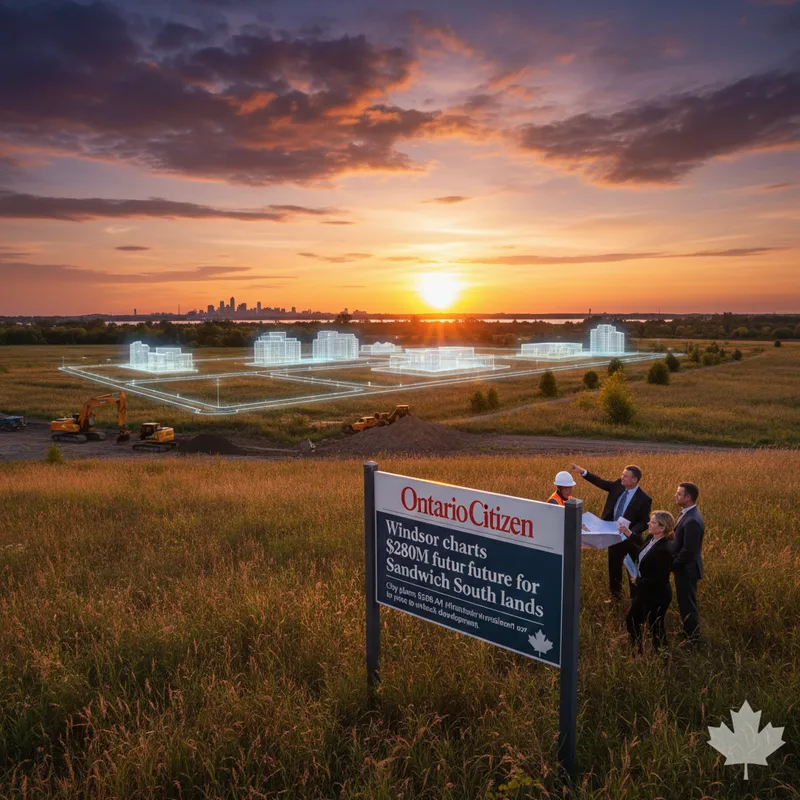
The City of Windsor is set to embark on a massive $280.4-million infrastructure project designed to pave the way for a new regional hospital, thousands of homes, and a sprawling industrial park in the mostly undeveloped Sandwich South area.
A detailed staff report heading to city council on Monday outlines the decade-long plan to extend essential services like roads, sewers, and stormwater management systems to the former farmlands near the city’s airport. To fund the ambitious undertaking, city administration is recommending taking on $238.9 million in debt, a loan that would be repaid over the coming decades through charges levied on the new development the project is intended to attract.
The investment is seen by city leaders as a foundational step to manage and propel Windsor's accelerating growth, spurred by major investments in the automotive and health care sectors. The plan aims to prepare the city for an influx of new residents and industries, ensuring that the necessary infrastructure is in place before the growth arrives.
A catalyst for growth
At the heart of the development is the new Fancsy Family Hospital, a major acute-care facility planned for the corner of Cabana Road and 9th Concession Road. Mayor Drew Dilkens identified the hospital, which requires approximately $80 million in municipal infrastructure support, as a "big attractor" for further investment.
That prediction is already bearing fruit. Spurred by the hospital project, London-based developer Schmuel Farhi has pledged to invest $1 billion to construct new housing on a 56-acre parcel of land nearby. This aligns with provincial goals to increase housing supply, a file the Ford government has been active on with policies like the temporary elimination of HST on new rental builds.
This isn’t just a sunk cost with no return. This is actually the proper role for a municipality to play, to plan and prepare for its growth.
Mayor Dilkens emphasized the proactive nature of the investment, stating the city must be prepared for the growth it anticipates. "You know these things are coming. We as a city have to be ready to support the growth that is here and the growth that we know will come as a result of some of these big infrastructure projects," he said.
Ward 9 Coun. Kieran McKenzie, who represents the area, voiced his support for the plan, viewing it as a crucial investment in the city’s future. “It’s an investment that’s going to build the future of our community,” McKenzie said. “We have a high level of confidence that the investments we make to set the table for development in the southeast will make good business sense for the City of Windsor, for the residents of the City of Windsor.”
Unlocking economic potential
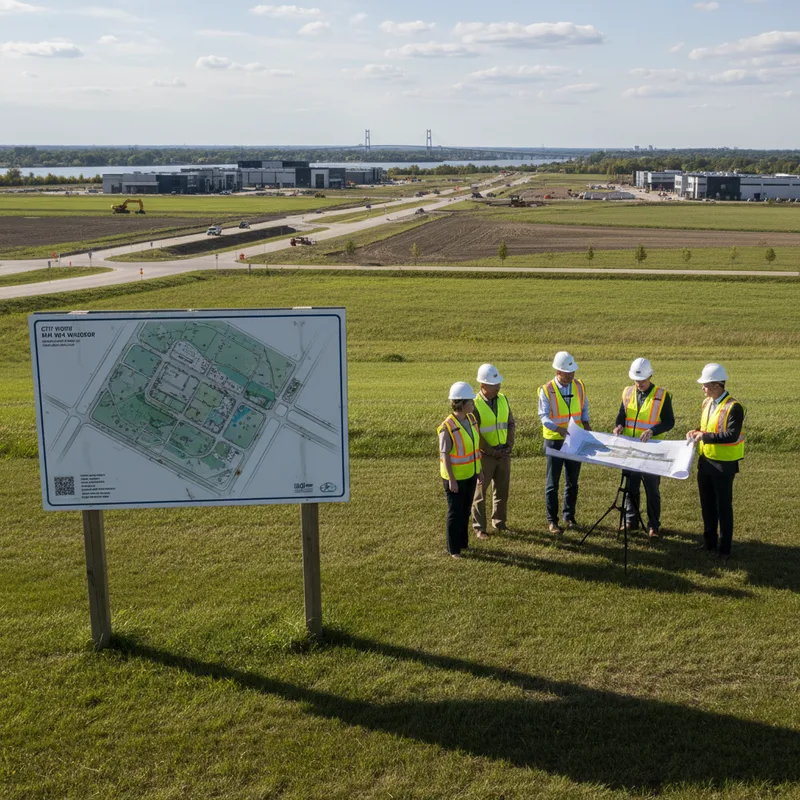
A significant portion of the project, about $108 million, is dedicated to servicing what the city calls the “airport employment lands.” The city acquired these nearly 200 hectares of land from the Town of Tecumseh in 2003 with the intention of creating an industrial hub.
More than two decades later, that vision is materializing. The area is now home to the $6-billion NextStar Energy Inc. battery factory, a joint venture between Stellantis and LG Energy Solution that is creating 2,500 direct jobs and is central to Canada's pivot to electric vehicle manufacturing. Additionally, Taiwan-based auto-parts manufacturer Minth Group is building a $300-million plant that will employ another 1,100 people.
Mayor Dilkens noted that the city is in active discussions with other businesses that require large tracts of serviced land, which are currently in short supply in the region. He warned against inaction, suggesting it would be a missed opportunity for future generations. "If we don’t get these things ready, if we don’t make this land ready, future mayors and future city councils will look back and say, ‘What the heck were they doing? They were asleep at the wheel,’" Dilkens said.
The success of these large-scale industrial projects is critical for both the municipal and provincial economies, a consistent theme in the Ontario budget announcements from the Ford government.
A phased, decade-long rollout
The Sandwich South Development Capital Works project is broken down into five distinct phases stretching over the next ten years.
- Phase 1 (2026-27): Costing an estimated $108 million, this initial phase focuses on the airport employment lands. It includes building roads, sewers, lighting, and a regional stormwater pond, as well as design work for the future Lauzon Parkway extension to a provincially-funded Highway 401 interchange.
- Phase 2 (2028-29): An $11.4-million phase dedicated to road widening and intersection upgrades on Cabana Road East between 9th Concession Road and Lauzon Parkway.
- Phase 3 (2030-31): This $87.8-million phase involves road improvements on Cabana Road from Walker Road to 9th Concession and building the trunk sewers and road networks required to service the new Fancsy Family Hospital.
- Phase 4 (2032-33): A $14-million project to widen Cabana Road from Lauzon Parkway east to the city limits with Tecumseh.
- Phase 5 (2034-35): The final, $59-million phase will upgrade and widen Lauzon Parkway from south of the CPKC Rail line to Cabana Road.
Financing Windsor's future
To cover the significant upfront costs, city staff have recommended borrowing the majority of the funds ($238.9 million) from Infrastructure Ontario, a provincial Crown agency that helps finance public infrastructure projects. The report to council states that using temporary borrowing during the construction period is an "appropriate use of debt."
The debt is slated to be repaid over several decades using development charges. These are fees collected from developers and builders to help pay for the growth-related capital costs required to service new homes and businesses. The city’s Chief Financial Officer, Janice Guthrie, assured the Windsor Star that the financial modelling for the repayment plan was "very conservative."
The report argues that the city must spend this money "in advance of and on the assumption that future development will occur once site servicing infrastructure is available." It positions the $280-million expenditure not as a speculative gamble, but as a necessary and strategic investment to secure future prosperity for Windsor.