A civic coalition says it has tracked $36 billion in Ontario government misspending since 2018.
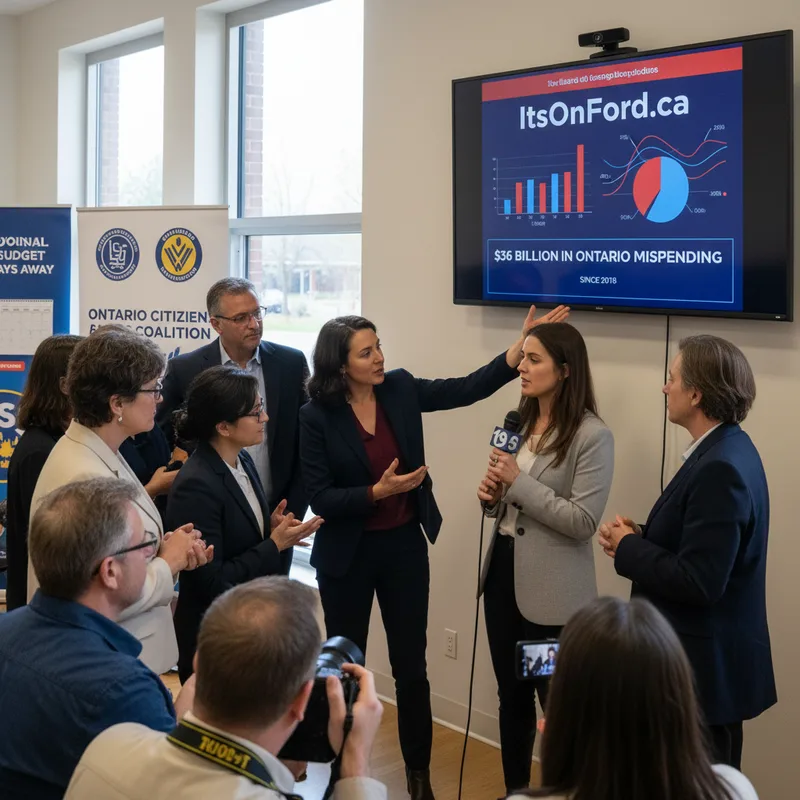
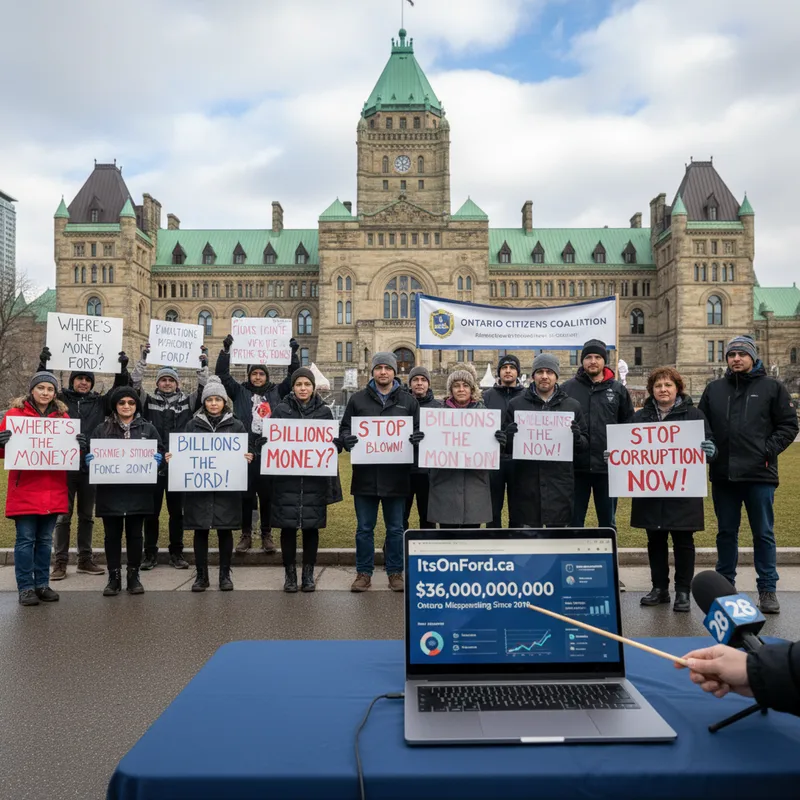
The groups launched a public dashboard at Queen’s Park on Monday, three days before the 2026 budget.
What is ItsOnFord.ca and what does it claim?
The Canadian Federation of Students Ontario, Environmental Defence, the Ontario Federation of Labour and OPSEU/SEFPO say they compiled a running total of provincial dollars they describe as “misspent, overspent, or given away” since the Progressive Conservatives formed government in 2018.
The coalition says the total includes cost overruns, legal losses, environmental rollbacks, “high-cost vanity projects,” “insider windfalls,” and “record advertising spending.” It says the figures come from “government records, audits, public reporting.”
The data is presented through a new website, ItsOnFord.ca, which the coalition calls a “community dashboard” meant to connect spending decisions to service gaps.
Why the coalition released the dashboard before ontario’s budget
The launch comes as Premier Doug Ford’s government prepares to table its 2026 budget. The coalition framed its release as a pre-budget check on what it calls the province’s “failed financial stewardship.”
“Budgets are about priorities, and this government has made theirs clear. While students are being pushed deeper into debt to access public education, we’ve seen billions in public funds mispent and handed out to private interests. It has never been more clear that this government will deliberately prioritize profit over people every single time,” said Cyrielle Ngeleka, chairperson of the Canadian Federation of Students Ontario.
The coalition argues the $36 billion figure, if redirected, could have addressed shortages across healthcare, long-term care and education. It also tied the discussion to recent provincial choices affecting student aid.
Budgets are about priorities, and this government has made theirs clear. While students are being pushed deeper into debt to access public education, we’ve seen billions in public funds mispent and handed out to private interests. It has never been more clear that this government will deliberately prioritize profit over people every single time.
Ontario’s fiscal path has been a focus at Queen’s Park ahead of budget day, as the province weighs new pressures and slower growth. Ontario Citizen has been tracking those headwinds in its coverage of how Doug Ford prepares 8th Ontario budget as tariffs, deficits bite.
What spending items the groups highlight
One of the coalition’s largest examples is Bill 124, the wage restraint law for broader public sector workers. The coalition says Ontario spent $430 million “to take workers to court” after the legislation was ruled unconstitutional twice.
It argues that sum could have funded “over 17,000 nursing position incentives.” The coalition’s release does not detail how it calculated that conversion.
The coalition also points to the “unnecessary $1.4B cost to speed up privatized alcohol sales.” The government has been reshaping alcohol retail rules, including steps linked to bring-your-own alcohol permits and other retail changes.
It says the $1.4 billion could have “stabilized colleges suffering from over 600 program cuts.” It also claims pre-election and “record advertising spending” could have funded 9,000 shelter beds.
The coalition further blames “mismanaging transit builds” for costs it says could have maintained OSAP grants for 16 years. The release says the premier “just cut” OSAP grants, but provides no detail in the text on which grants.
How the coalition links spending to services
The coalition says its goal is to translate big totals into everyday impacts, including emergency rooms that cannot stay open and other service pressures. It argues “every dollar documented came from taxpayers,” while service cuts followed from “provincial spending choices.”
“Ontario's economy grew, but $36 billion went towards cost overruns, legal losses, political advertising, insider windfalls, and other misguided priorities, not to the people who needed it. The growth was real. The ‘trickle down’ wasn't,” said JP Hornick, president of OPSEU/SEFPO.
Environmental Defence’s Tim Gray tied the coalition’s accounting to legal disputes and environmental policy decisions. ”Attacking environmental protections is expensive for the public. Letting polluters pollute for free or losing lawsuits while cancelling renewable energy contracts means that there is much less money available to solve the housing crisis or ensure people can see a doctor.”
The coalition’s release does not include a response from the Ford government. Ontario Citizen requested comment, including how the province would address the coalition’s $36 billion calculation and its specific examples.
What the groups say about freedom of information changes
The coalition also used the launch to warn about transparency, pointing to “recent reforms to freedom of information (FOI) legislation.” It says “retroactive changes” would put the premier’s and cabinet ministers’ records “behind a curtain of secrecy.”
It said the changes would affect FOI requests tied to controversies “from the Greenbelt to the Skills Development Fund.” Ontario’s FOI rules and exemptions are outlined by the Ontario government’s FOI request guide.
Laura Walton, president of the Ontario Federation of Labour, said the group sees labour market impacts flowing from provincial priorities. “Ontarians want a government whose priorities align with the people who create the wealth, not the well-connected few. When the government’s priorities are out of whack, the impact of their bad decisions are fewer good jobs, weaker protections, and rising pressure on workers and their families."
The coalition is urging residents to use the dashboard to track spending issues through budget week. Ontario’s 2026 budget is expected later this week.
Separately, fiscal restraint debates are unfolding across jurisdictions, including Ottawa’s plan to reduce headcount. Ontario Citizen has been following those moves in Federal departments plan 12,000 job cuts through 2028-29.
For more on wider provincial economic policy debates, readers can also see the Toronto Sentinel report on how Ontario takes Billy Bishop Airport under a special economic plan.