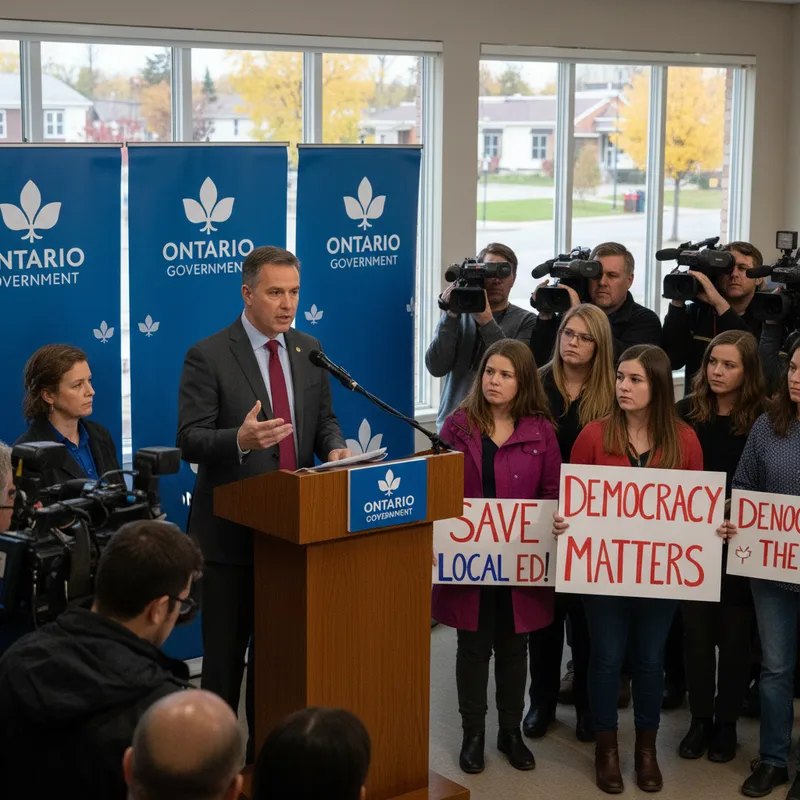
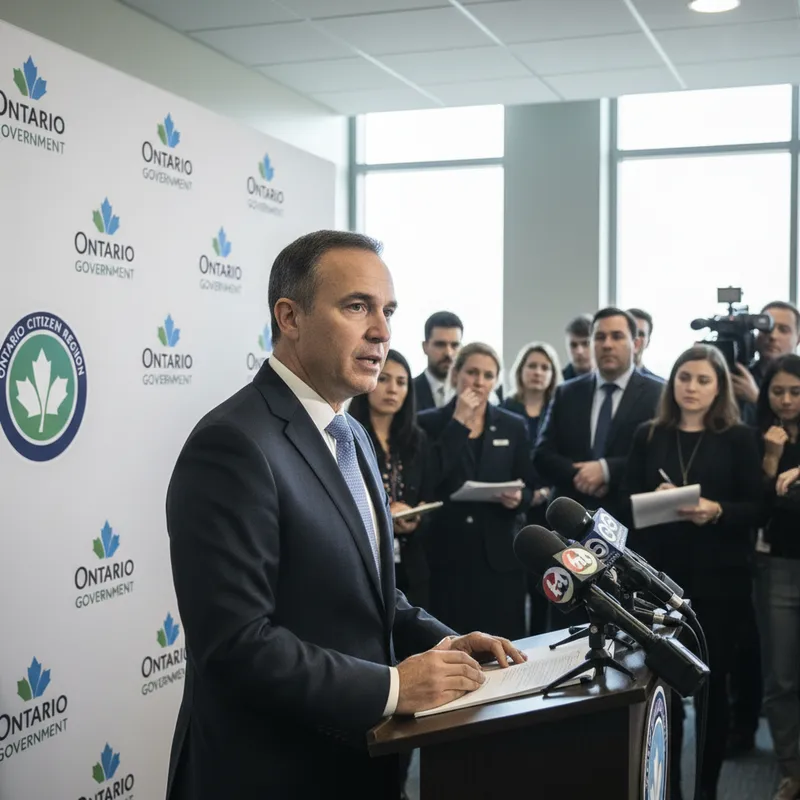
The Ontario government is preparing to introduce legislation that will bring “significant change” to the province’s school boards, according to Education Minister Paul Calandra. The minister’s comments, made to reporters on Monday, have signaled a new front in the government’s ongoing efforts to reshape the education sector.
While Calandra offered few specifics on the forthcoming bill, he made a point of stating that the government would not use the controversial notwithstanding clause to implement the changes. He also directly addressed speculation that the reforms could include the complete dissolution of elected school board trustees.
“Legislation that I am working on will not rely on the notwithstanding clause to abolish trustees,” Calandra said. The statement, intended to pre-empt criticism, has instead amplified concerns among opposition parties and education stakeholders who fear the move is a step toward centralizing power at Queen’s Park.
The relationship between the Progressive Conservative government and Ontario’s 72 school boards has been fraught with tension since 2018. Conflicts have erupted over funding levels, curriculum changes, pandemic response measures, and labour negotiations, with the government often accusing boards of mismanagement and obstruction.
Concerns rise over local democracy
Critics were quick to condemn the announcement, framing it as another attack on the democratic institutions that provide local oversight for Ontario's schools. School board trustees are the only officials in the education system directly elected by the public. They are responsible for setting local education priorities, managing billion-dollar budgets, and hiring senior administrative staff.
NDP Education Critic Chandra Pasma said the move is part of a pattern of the Ford government undermining anyone who disagrees with it. “This government has shown time and again that it has no respect for local democracy,” Pasma stated. “Whether it’s municipalities or school boards, if they stand up to this government, the premier will do everything in his power to silence them.”
This government has shown time and again that it has no respect for local democracy. Whether it’s municipalities or school boards, if they stand up to this government, the premier will do everything in his power to silence them.
Teachers’ unions and school board associations echoed these concerns. The Ontario Public School Boards’ Association (OPSBA), which represents public school trustees across the province, has consistently defended the role of locally elected boards as essential for a responsive and accountable education system. In a statement on their website, the association notes that trustees ensure "the system is responsive to the needs of the students and parents it serves."
A history of provincial intervention
The Ford government has previously demonstrated its willingness to use extraordinary measures to impose its will. In 2022, it passed Bill 28, which used the notwithstanding clause to pre-emptively block a strike by 55,000 education support workers represented by CUPE. The government was later forced to repeal the bill in the face of widespread public backlash and a united labour movement threatening a general strike. This history makes Calandra’s explicit mention of the clause particularly noteworthy.
The Progressive Conservative government has long argued that some school boards are too focused on internal politics and ideological battles, distracting from the core mission of improving student achievement in areas like reading, writing, and math. Premier Doug Ford has often positioned his government as a fiscally responsible force battling against what he describes as inefficient and wasteful public bodies, a theme tracked by civic watchdogs like the ItsOnFord.ca dashboard.
These reforms also come as the province prepares its next budget, where every dollar spent on education will be under scrutiny. The government’s fiscal constraints, outlined in the lead-up to the upcoming Ontario budget, are likely a driving factor in seeking greater control over school board spending.
What could the changes look like?
With the minister ruling out the abolition of trustees, speculation has turned to what the “significant change” might entail. The reforms could involve a range of measures aimed at strengthening provincial oversight and curtailing the autonomy of school boards.
Possible changes could include reducing the number of trustees, granting the ministry direct veto power over certain board decisions, or imposing standardized governance models. The government may also be looking to take greater control over school board property and assets, potentially to repurpose surplus school lands for housing or other provincial priorities.
The situation in Ontario stands in contrast to other jurisdictions, like Boston, where teacher unions have been actively protesting job cuts and fighting for resources at the municipal level, highlighting the role local advocacy can play. As seen in a recent Boston teachers’ protest, local officials are often the first line of defence against cuts impacting students.
For now, educators, parents, and trustees are left in a state of uncertainty, waiting for the government to table its legislation. The lack of detail has created an information vacuum, which opposition parties and unions are filling with warnings of a provincial power grab. The coming weeks are expected to reveal the full scope of the government's plans, setting the stage for what is likely to be another heated battle over the future of public education in Ontario.