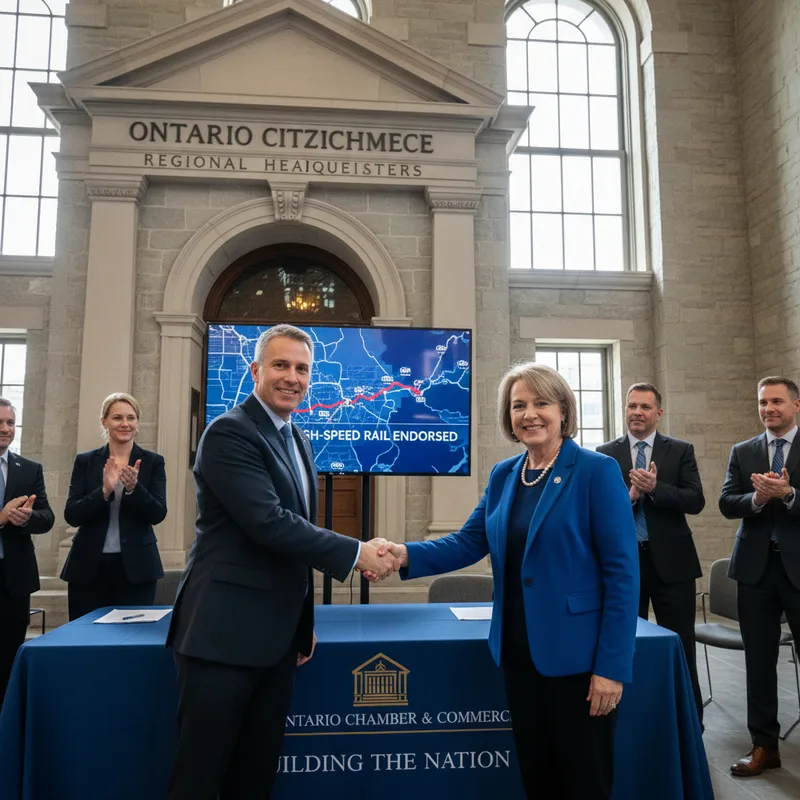
The Ontario Chamber of Commerce (OCC) has thrown its support behind the proposed high-speed rail corridor connecting Toronto and Quebec City, championing the project as a critical piece of nation-building infrastructure that will bolster economic competitiveness. The endorsement adds a significant voice from the business community to the decades-long discussion surrounding high-speed rail in Canada.
Daniel Tisch, president and CEO of the influential business advocacy group, stated that the project is essential for linking over half of the country's economy. He emphasized its potential to spur regional growth, boost tourism, and improve labour mobility by drastically cutting commute times for workers across Ontario and Quebec.
"The Ontario Chamber is proud to support this project and looks forward to continuing to work with governments and partners to ensure it is delivered successfully and strengthens Canada’s economic competitiveness," Tisch said in a statement. He stressed that fast, reliable, and electrified rail would meet the evolving needs of businesses and communities along the densely populated corridor.
A long-held vision gains momentum
The concept of a high-speed rail line through the Quebec City-Windsor corridor is not new, with studies and proposals dating back to the 1970s. However, the project has gained renewed traction following a recent joint announcement by Prime Minister Mark Carney and Ontario Premier Doug Ford. They confirmed their governments' commitment to advancing the ALTO high-speed rail initiative, which aims to finally bring modern, fast passenger rail to Canada's busiest corridor.
Canada needs transformation, not timidity, in building the infrastructure that will power productivity and performance.
For decades, proponents have argued that such a project would reduce highway congestion, lower carbon emissions, and provide a more efficient travel alternative to air travel for shorter distances between major centres like Toronto, Ottawa, and Montreal. Past hurdles have often included high costs, political will, and coordination between federal and provincial governments, but the latest partnership signals a more unified front.
The OCC’s endorsement follows this political momentum, with Tisch calling for rigorous planning and execution. He emphasized the need for discipline, consultation, and cautious planning to ensure the project delivers "lasting value." Tisch urged governments to avoid delays that could dampen business confidence and to focus on execution with "faster approvals, predictable multi-year planning and clear accountability."
Infrastructure as an economic driver
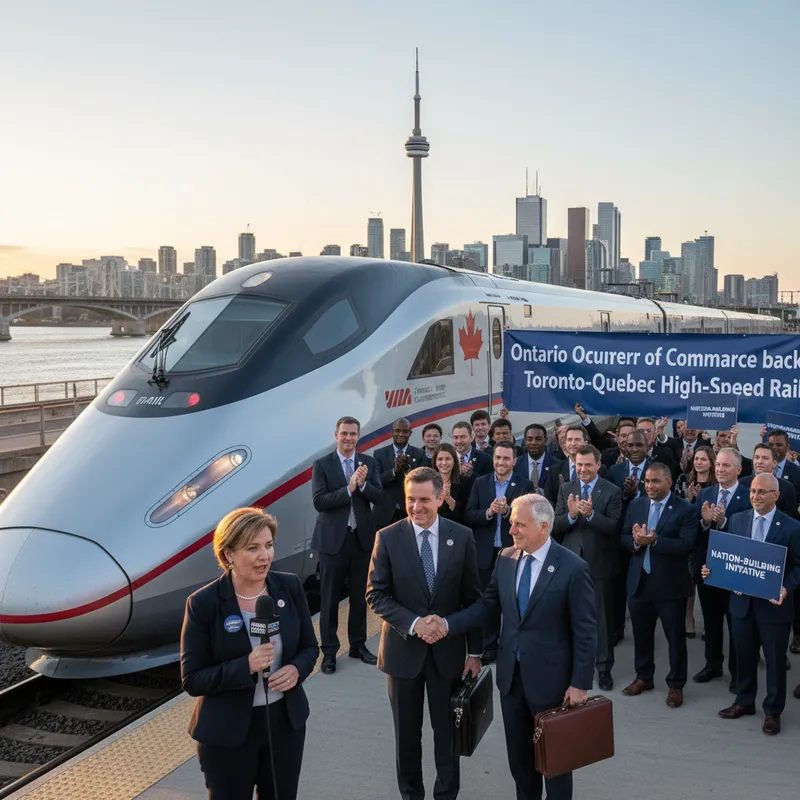
The push for high-speed rail aligns with the OCC's broader advocacy for significant infrastructure investment as a means of stimulating the economy. Representing 60,000 members and a network of 143 local chambers and boards of trade, the organization has consistently argued that strategic investments in transportation and other public assets are fundamental to a competitive provincial economy.
This position was highlighted in an April 2025 letter to the provincial government, where the OCC supported the Association of Municipalities of Ontario's (AMO) request for a $3.45 billion annual stimulus over five years for municipal infrastructure and social housing. The chamber pointed to analysis by Oxford Economics suggesting such a stimulus could reduce Ontario's GDP contraction by 28 per cent and prevent the loss of over 14,000 jobs in 2026 alone.
In the letter, Tisch argued that investments in transportation networks, reliable services like water and wastewater, and affordable housing are all interconnected. These elements create livable communities that attract workers and customers, reduce labour market mismatches, and enable the efficient movement of goods. He noted that municipalities have over $250 billion in capital works projects planned over the next decade that could be accelerated to protect jobs and drive productivity. The chamber has also previously advocated for responsible funding models, including public-private partnerships, to avoid placing excessive cost burdens on businesses and households. This approach is seen as crucial for massive undertakings like the ALTO high-speed rail line, similar to the extensive upgrades planned for Sunshine Station. For more on provincial spending, see the recent story on MPP pay raises.
A call for action and accountability
With both political and business support coalescing, the focus now shifts to the practicalities of turning the high-speed rail vision into reality. The project involves complex engineering, land acquisition, and environmental assessments, all of which will require seamless coordination between multiple levels of government and the private sector.
The federal government has initiated the procurement process, seeking advice from the private sector on the best path forward for the project, which is now officially dubbed High Frequency Rail. According to VIA HFR, the new entity overseeing the project, the plan involves building over 1,000 kilometres of new, dedicated passenger rail lines.
"Better alignment of housing, transit and growth planning will support investment, productivity and stronger communities," Tisch said, reinforcing the connection between major transit projects and other government priorities. He added that municipalities also require the "tools and incentives to move projects forward while maintaining affordability."
For a province grappling with a housing crisis and the need to boost economic productivity, the promise of high-speed rail offers a compelling solution. As the project moves from proposal to planning, the OCC and other stakeholders will be watching closely to ensure the government’s follow-through matches its ambitious vision.
The successful completion of the Toronto-Quebec City corridor could serve as a model for future infrastructure projects, including extensions further into Southwestern Ontario, and fundamentally reshape the economic geography of the region for generations to come.