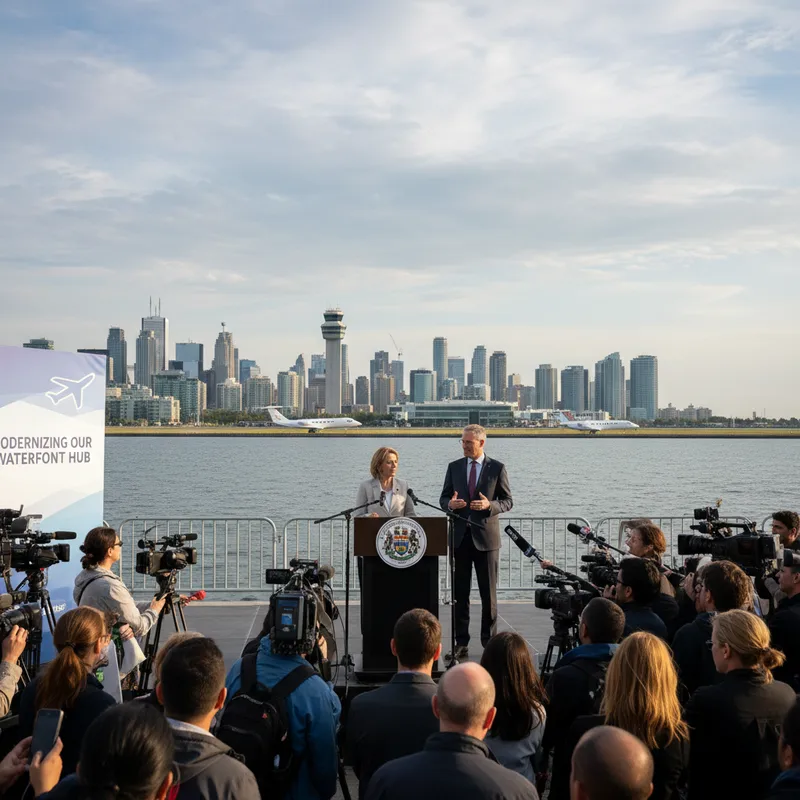
The provincial government is moving to take over Toronto’s role in governing Billy Bishop Toronto City Airport, introducing legislation that would fast-track a controversial expansion to allow quieter jets and significantly increase passenger traffic. The move reignites a decades-long debate over the downtown airport
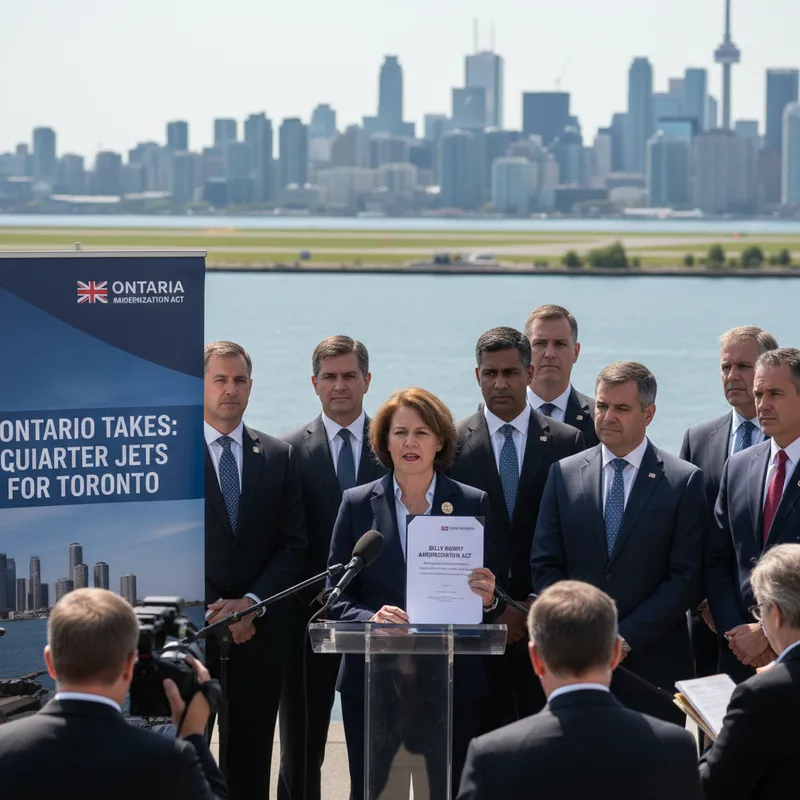
On March 23, 2026, the Ontario government announced it would introduce legislation to replace the City of Toronto in the tripartite agreement that has managed the airport since 1983. The province also plans to compensate the city for its airport lands and designate the area a special economic zone to accelerate development, including runway and terminal improvements.
Premier Doug Ford signalled the government's direction earlier in the month. On March 10, he told CityNews that Toronto would be compensated for both the land value and the airport-related revenue it currently receives. He stressed the plan was focused on smaller, modern aircraft, not long-haul jets.
From political signal to formal policy
Premier Ford’s reference to a ‘whisper jet’ on March 10 strongly suggests the government’s preferred aircraft is the Airbus A220, formerly the Bombardier CSeries. This is the same aircraft family that Porter Airlines unsuccessfully pushed to bring to the island airport nearly a decade ago, a campaign that was ultimately blocked by the federal government.
The airport’s governance structure is uniquely complex. It is governed by a tripartite agreement between PortsToronto, the City of Toronto, and Transport Canada. According to city documents, PortsToronto owns approximately 78 per cent of the land, the city holds about 20 per cent, and Transport Canada owns the remaining 2 per cent. The Ford government's proposed legislation would fundamentally alter this long-standing arrangement.
The airport's operator, PortsToronto, has already signalled that the current model is unsustainable for long-term planning. Its president and CEO, RJ Steenstra, stated in a March 6 report that the airport's unique restrictions prevent it from effectively planning for the future.
Unlike other airports, Billy Bishop Airport is restricted under its current governance model and, as such, is unable to effectively plan and design the airport for the future.
The province is backing its takeover with ambitious economic projections. The government claims the expansion could boost annual passenger numbers from two million to ten million and increase the airport's economic contribution to $8.5 billion by 2050. In 2024, the airport was credited with generating $1.8 billion in economic output and supporting 9,000 jobs.
Safety upgrades distinct from jet expansion
One of the most critical aspects of the current debate is the difference between a mandatory safety project and the province’s much broader expansion plan. Billy Bishop is already required by federal law to build Runway End Safety Areas (RESAs) at both ends of its main runway. These are safety zones designed to reduce damage if a plane overruns or undershoots the runway.
Federal regulations mandated RESAs for airports serving more than 325,000 passengers annually for two consecutive years, a threshold Billy Bishop surpassed long ago, peaking at 2.8 million passengers in 2019. The compliance deadline for the safety project is July 12, 2027.
To facilitate this necessary work, the tripartite agreement was amended on January 28, 2025, a move that also extended the agreement’s term to December 31, 2045. The safety project itself, which involves extending the landmass into the harbour, has already received a green light from the Impact Assessment Agency of Canada. However, these federally required safety upgrades do not, by themselves, authorize the use of jets, which are currently banned under the 1983 agreement for most operations.
U.S. Preclearance already driving growth
While the debate over jets continues, a separate development has already boosted the airport's growth potential. On March 10, 2026, a United States Customs and Border Protection (CBP) preclearance facility opened at Billy Bishop, an upgrade supported by a $30 million federal investment. This allows travellers to clear U.S. customs in Toronto, making connections in the U.S. much faster.
The federal government projects that preclearance alone could more than double the airport’s annual economic contribution from $2.1 billion to $5.3 billion. “Strong transportation links are important to our economy,” said Transport Minister Steven MacKinnon in a statement.
Airlines have been quick to capitalize on the new facility. In October 2025, Air Canada announced a significant expansion, launching new daily services from Billy Bishop to New York, Boston, Washington, and Chicago. Porter Airlines, which has long advocated for the facility, noted it has flown over 13 million passengers between the island airport and the U.S. since 2008, underscoring the proven demand for transborder travel.
A renewed battle for the waterfront
The government’s plan effectively overrides local control and revives a contentious battle over the future of Toronto’s waterfront, pitting business and transportation interests against residents and community groups concerned about noise, traffic, and environmental impacts. The debate over the airport has been a political hot potato for decades, involving complex questions about urban planning, public access to the waterfront, and the appropriate scale of aviation in the heart of Canada’s largest city.
The Ford government’s legislation represents the most forceful push for jet-powered commercial service at the airport to date. While the existing agreement already runs until 2045 to accommodate financing for safety upgrades, the province’s intervention seeks to fundamentally rewrite the airport’s future and its relationship with the city it serves.