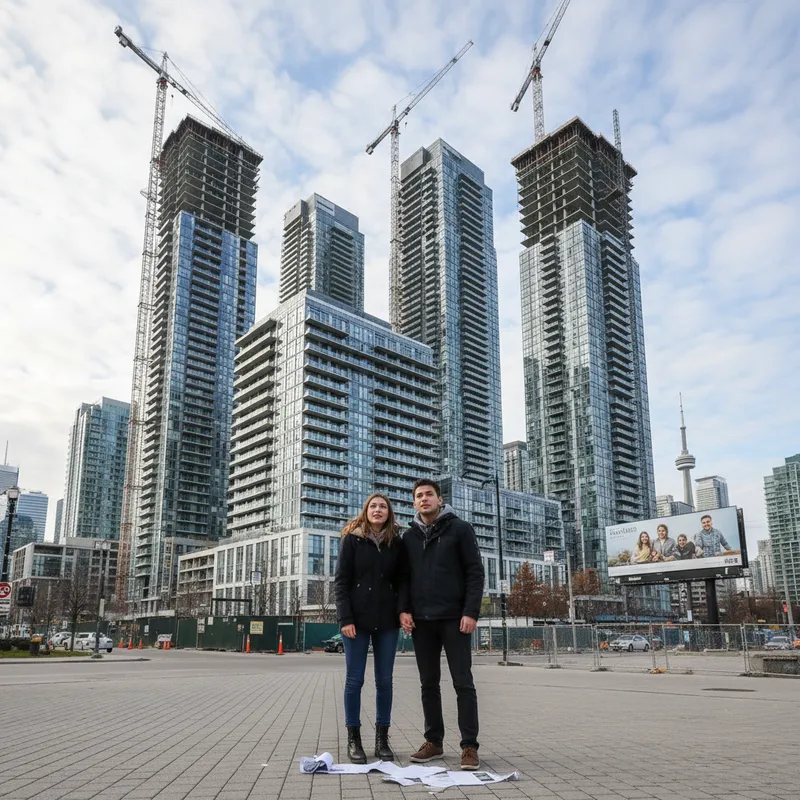
A wave of mixed emotions washes over Ami Maknoon as he looks at the half-finished condo tower on Toronto’s Lake Shore Boulevard. A one-bedroom unit inside was meant to be a home for his growing family and a long-term investment for his two daughters. But now, with the deal set to close, he faces a crushing financial shortfall that could wipe out his life savings.
In 2018, Maknoon signed a pre-construction agreement for a condo valued at approximately $650,000, placing a 20 per cent deposit. The remaining 80 per cent, or $520,000, was to be covered by a mortgage. However, after years of construction delays exacerbated by the COVID-19 pandemic, the Toronto real estate market has cooled significantly. The newly appraised value of his unit is just $500,000.
A bank will now only lend him 80 per cent of this lower value, amounting to $400,000. The developer, however, still legally expects the original agreed-upon price. This leaves Maknoon with a staggering $120,000 gap that he must pay out of pocket.
A 'perfect storm' hits the market
Maknoon’s predicament is a scenario playing out for hundreds, if not thousands, of buyers across the country. Toronto-based mortgage broker Sean Cooper describes the situation as a "perfect storm." A slowing Canadian economy, coupled with a stall in population growth, has created immense challenges for condo investors and landlords.
Data shows that apartment prices in Toronto have fallen back to levels not seen since the early days of the pandemic, with condo values for those who bought at the market’s peak in 2022 dropping by as much as 25 per cent. The downturn is stark. According to industry data, total condo sales in the Greater Toronto Area fell 21.7 per cent year-over-year in the first quarter of 2025, while new construction sales hit their lowest quarterly volume since 1995.
This market collapse represents the unwinding of nearly a decade of speculation-driven growth. While some analysts fear a repeat of the 1990s housing crash, analysis from the Canada Mortgage and Housing Corporation (CMHC) suggests key differences. Today, a structural housing shortage underlies the market, and stricter lending rules, including mortgage stress tests and higher pre-sale requirements for developers (over 70 per cent of units), provide a cushion that was absent three decades ago.
Legal experts see unprecedented challenges
The sudden reversal has caught many off guard. "I’ve been a real estate lawyer for almost 50 years, and I’ve never seen anything quite like this," says Vancouver-based lawyer Perry Ehrlich. "Usually real estate is great, and if you hold it, it only gets better and better. But what’s monumental is the fact that people have put down huge deposits and think they can get bank financing… and they can’t."
Alexandra Raszewska, a real estate lawyer in Toronto, says her office is fielding one or two calls every day from buyers in similar situations. "Closings are coming up this year, and they can’t cover the gap," she says. "That is very dangerous nowadays, as people are unfortunately learning (buying condos) is no longer a mechanism to make a profit. People are truly losing a lot of money and they’re losing their deposits."
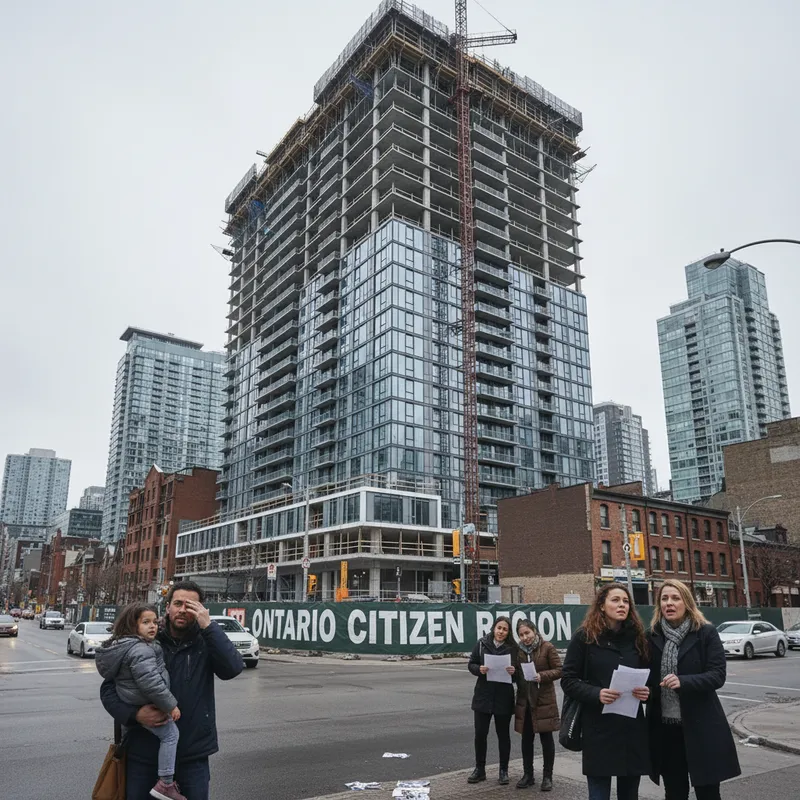
The crisis stems from a confluence of factors, including aggressive interest rate hikes that have dramatically increased borrowing costs and a glut of supply from pandemic-era projects reaching completion just as investor demand has vanished. This has led to the most severe downturn in the Toronto condo market in over 30 years, with sales hitting 28-year lows.
Few options for struggling buyers
For buyers like Maknoon, the path forward is fraught with difficult choices and significant risk. Experts say the options are limited: secure the extra funds from family or by cashing in investments like an RRSP, attempt to negotiate with the developer, reassign the contract to a new buyer, or walk away from the deal entirely.
The latter two options carry their own perils. Reassigning a contract in a falling market is exceptionally difficult, as a new buyer would need to cover the same financial shortfall. Defaulting on the contract, while not illegal, means forfeiting the deposit and opening oneself up to a lawsuit from the developer for any losses they incur upon reselling the unit.
"In the worst-case scenario – I’ve had to refer some of my clients to trustees in bankruptcy because with the reconstruction contract, they are in a negative position as to their net worth and they’re going to have to go bankrupt," explains Toronto real estate lawyer Bob Aaron.
Raszewska advises clients to first approach the developer to discuss potential solutions, such as a price reduction, a vendor-take-back mortgage where the developer provides some financing, or swapping the agreement for a smaller, more affordable unit. However, she concedes there is "very little room to renegotiate with these builders."
Calls for intervention and a new housing model
Facing the potential loss of his deposit, Maknoon is considering walking away from the contract and is calling for government assistance. “The government is doing nothing,” he says.
A novel solution has emerged from the private and public sectors. High Art Capital, a real estate company, has partnered with the Building Ontario Fund (BOF), a provincial Crown agency, to create a $1.3-billion fund. The initiative aims to purchase unsold condos in the GTA and convert them into long-term affordable rental housing. This could help stabilize the market by absorbing excess inventory.
By converting unsold condo inventory into rental units, Building Ontario Fund is creating affordable housing for the GTA’s workforce, helping to stabilize the housing market and attract private capital.
Ryan Roebuck with High Art Capital stresses the program’s market-based approach. "This is not a bailout, not a grant program, and not a taxpayer handout," he says. "Units will be acquired through an open and competitive market call with clear criteria around location, quality, unit mix and price."
The federal housing minister’s office did not respond to a request for comment on the matter. As developers and buyers navigate the current turmoil, the collapse in new construction starts, which are down 88 per cent from historical averages, is creating the conditions for another housing crisis: a severe shortage of supply expected by 2026-2027. For now, experts remain watchful. "It’s a good idea," Aaron says of the new fund. "It remains to be seen whether it will actually work out to fulfill the demand and the supply issues."