Ontario maple syrup season has officially begun as sugar bushes across the province open their gates for the spring harvest. While the calendar says winter, the recent spell of mild daytime temperatures and freezing nights has triggered the annual sap flow in local maples. More than 10 major sugar shacks in the Halton and Greater Toronto Area are now welcoming visitors for tours and tastings. The season typically runs from late February through April, depending on the weather conditions required for the trees to release their sap. Local producers remain a significant part of the regional economy. This growth mirrors broader trends in the sector, such as when the federal government invests in food entrepreneurs to help scale local production and distribution.
The science of the sap
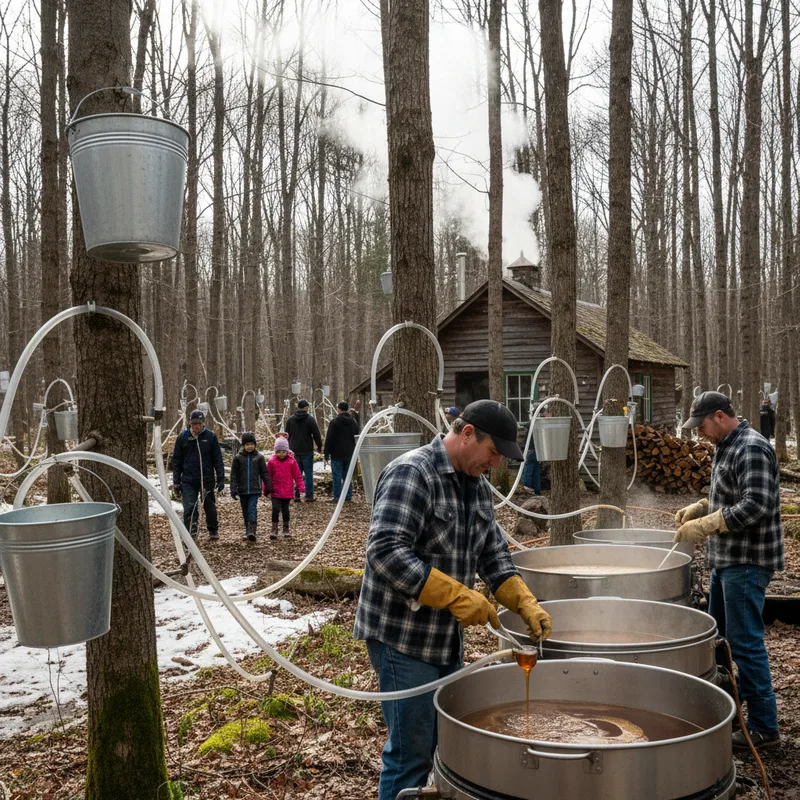
For the sap to run, temperatures must drop below freezing at night and rise above zero during the day. This pressure change pushes the clear, watery liquid out of the tree's trunk. Once collected, it is boiled down in evaporators to create the thick, golden syrup. It takes approximately 40 litres of sap to produce just one litre of maple syrup. Producers in the Halton region are currently monitoring their lines daily to ensure they capture the peak of the flow. Many have moved away from traditional buckets to modern vacuum tubing systems to increase efficiency. Even with modern technology, the window for production is short. Once the trees begin to bud, the chemical composition of the sap changes, giving the syrup a bitter "buddy" flavour. This marks the hard end of the production season.
Where to visit this spring
Conservation Halton is hosting its annual Maple Town event at Mountsberg Conservation Area. Visitors can see how sap was historically collected and processed. The site features demos of old-fashioned kettle boiling alongside more modern methods. Bronte Creek Provincial Park is also running its Maple Syrup Festival on weekends throughout March. The park offers wagon rides to the sugar bush and historical re-enactments at the Spruce Lane Farmhouse. Staff demonstrate the techniques used by early settlers in the nineteenth century. Near Kitchener, several family-run farms have opened their doors. This area has seen a renewed focus on its greenery lately, as Kitchener seeks public input on how to manage and expand its tree canopy. Maples remain a priority species for many of these local forestry initiatives. Further afield, festivals are popping up to celebrate the harvest. Similar to how the new Mandurah Market Trail connects artisans with the public, Ontario's syrup trails encourage residents to visit multiple producers in a single weekend.
Environmental factors and outlook
The timing of the season has become less predictable in recent years. Rapidly warming winters can cause the sap to run earlier than usual, sometimes starting as early as January. Producers must be ready to tap their trees the moment the weather breaks. According to the Ontario Maple Syrup Producers Association, the province is the second-largest producer in Canada. The industry supports thousands of jobs ranging from forestry management to retail and tourism. Preservation of these woodlots is essential for the industry's survival. Groups focused on land management are keeping a close watch on these habitats. This is reflected in the way environmental groups are being offered grants to protect local biodiversity and ensure the health of the province's forests. Most sugar bushes require pre-booked tickets for weekend visits as demand remains high during the March Break period. Prices vary by location, though most include access to hiking trails and educational demonstrations. Properties like Crawford Lake and Mountsberg will continue their programmes until early April.