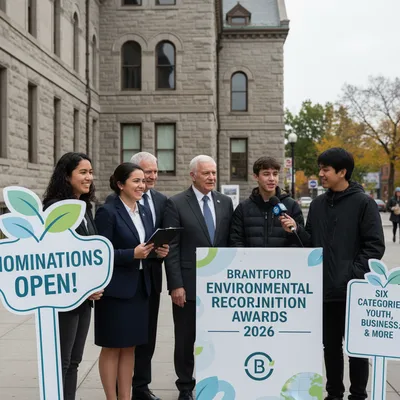
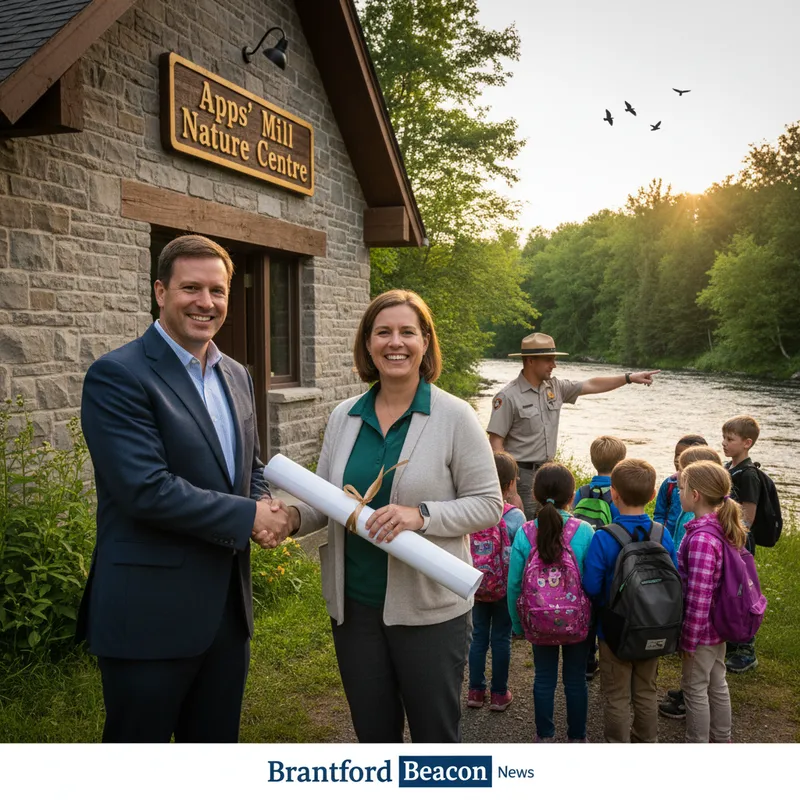
The City of Brantford has moved to secure the future of environmental education at Apps’ Mill Nature Centre. Council endorsed a new three-way agreement with the County of Brant and the Grand River Conservation Authority (GRCA) during a committee meeting on March 3. The deal ensures that nature programming can continue at the 40-hectare site on Robinson Road. This follows changes to provincial laws that altered how conservation authorities can fund their operations. Apps’ Mill was established in the early 1980s following a donation from SC Johnson to the GRCA. It sits on a tract of mature forest, fields, and wetlands that serves as a living classroom for thousands of local residents. This move to protect local green spaces comes as Brantford seeks nominations for its upcoming environmental awards.
Provincial funding changes trigger local action
The need for a formal agreement stems from 2021 amendments to Ontario’s Conservation Authorities Act. Those changes meant that environmental education programs could no longer receive municipal funding as a matter of course. Organizations like the Grand River Conservation Authority now require specific contracts with municipalities to fund these services. Under the previous system, the GRCA used a general levy to support its five nature centres. The new provincial rules classify education as a "Category 3" service. This means it is considered a non-mandatory program that requires voluntary financial support from participating local governments. Without this local endorsement, the programs at Apps’ Mill faced a precarious financial future. The GRCA has delivered environmental education for more than 50 years. It operates five such centres across the Grand River watershed to help people understand local ecosystems.
Education for thousands of students
The centre is a significant destination for schools across the region. More than 6,000 elementary and secondary students visit Apps’ Mill annually. They participate in outdoor learning experiences that cannot be replicated in a standard classroom. The GRCA currently works with the Brant Haldimand Norfolk Catholic District School Board and the Grand Erie District School Board. However, those boards only pay for the cost of program delivery and specific equipment. They do not cover the broader overhead costs of maintaining the 40-hectare facility. The new agreement fills this gap by providing a stable funding structure between the city, the county, and the conservation authority. It ensures the infrastructure remains in place for community groups and students alike. Similar focus on regional programming can be seen in other areas, such as when South Simcoe prepares for its annual public events.
Regional cooperation on conservation
This partnership reflects a growing trend of regional bodies working together to maintain services affected by provincial policy shifts. The GRCA manages the Grand River watershed, which is a complex system involving dozens of municipalities. Cooperation is necessary to keep sites like Apps' Mill open to the public. While Brantford and the County of Brant have reached this deal, other conservation sites in Ontario are seeking similar arrangements. In some cases, programs have been scaled back. For example, Auckland Transport recently had to adjust its infrastructure timelines, showing that public service adjustments are a common challenge for regional authorities globally. Local officials say the Apps’ Mill agreement provides certainty for the next several years. It allows the GRCA to plan its curriculum and staffing without the immediate threat of budget cuts. The centre remains one of the primary locations for bird watching, hiking, and wetland study in the Brant area. The City of Brantford and the County of Brant will share the costs of the agreement relative to their population sizes. This ensures the financial burden is distributed fairly across the residents who use the facility most often. Council will review the effectiveness of the funding model as part of its regular budget cycles.