Southern Ontario might be Canada’s busiest corner, but it is also one of its most underrated fishing regions. Within a couple of hours of the GTA, you can cast for spring steelhead, summer bass, fall salmon and, in winter, punch a hole for lake trout or perch. The trick is knowing where you can fish legally, where you can actually get to the water with kids or mobility needs, and how to stay onside of Ontario’s ever-detailed rules on seasons, limits, bait and sanctuaries.
This guide is written for anglers and families who want “show up and fish” access, public parking, safer shorelines and clear regulatory signposting, not remote bushwhacks or secret creeks. For every location below, we flag the most accessible entry points, the fish you are most likely to find, and the best time windows to plan around. Always confirm the exact rules for the waterbody you are fishing using the province’s Fish ON-Line tool and the current Ontario Fishing Regulations Summary, because seasons and exceptions can change by Fisheries Management Zone (FMZ) and by specific river sections.
External authority links worth bookmarking before you go: Ontario’s free family fishing dates, the Ontario Fishing Regulations Summary, and Fish ON-Line for maps, zones and rule lookups.
Fishing licences in Ontario (2026): what you need, what it costs, and when it’s free
In Ontario, most anglers aged 18 to 64 need two things: an Outdoors Card (valid for three calendar years) and a fishing licence (valid for one or three years). Youth under 18 and adults 65+ do not need to buy a licence, but must carry government-issued ID showing name and date of birth.
Where to buy: The province’s official portal is HuntAndFishOntario.com. You can also buy in person at some ServiceOntario locations or authorized licence issuers. If you buy online, you can fish immediately using your digital or printed Licence Summary while you wait for the physical Outdoors Card to arrive.
Sport vs. conservation licences: A sport licence generally allows higher catch and possession limits. A conservation licence has reduced limits and is a good option for families who plan to keep a meal occasionally, or for anglers who mostly release fish but want to stay flexible.
Free fishing in 2026 (Canadian residents): Ontario has four free fishing periods when you do not need to purchase a licence, but you must still follow seasons, size limits and catch limits (you fish under conservation limits). The province lists the 2026 dates as: Family Fishing Weekend (Feb. 14–16), Mother’s Day Weekend (May 9–10), Father’s Day Weekend (June 20–21) and Family Fishing Week (June 27–July 5). Details are on Ontario.ca’s free family fishing page.
Non-residents: Non-Canadian residents have different options, including 1-day and 8-day licences. Ontario explains requirements on its non-resident fishing licence page.
Practical compliance tip: Keep a screenshot or PDF of your Licence Summary on your phone, plus a tape measure and a small copy of your FMZ limits. The fastest way to avoid an issue is to measure and release quickly if you are unsure.
Best times of year to fish in Southern Ontario (what’s biting by season)
Southern Ontario’s fishing calendar is built around temperature and migrations. Regulations also shift by species and FMZ, so treat these as planning cues, then confirm the open seasons and any special sections before you leave.
- Late winter (January to March): Ice fishing for lake trout on Lake Simcoe (where permitted) and perch on many smaller lakes. Always verify ice safety and local rules.
- Early spring (March to April): Steelhead runs on tributaries flowing into Lakes Ontario, Erie and Huron. Look for river access with clear signage and room to keep distance from other anglers.
- Late spring (May to June): Walleye openers on many rivers and lakes. Pike can be excellent earlier in spring, depending on local seasons.
- Summer (June to August): Largemouth and smallmouth bass on weedy bays, rock points and shallow flats. Great family season because conditions are warm and shore fishing is easiest.
- Fall (September to November): Chinook and coho salmon runs on Great Lakes tributaries, plus staging bass and pike.
If you are planning a family weekend that includes camping, our internal guide to Ontario Parks: Your 2026 Summer Camping Reservation Guide is a handy companion for booking timelines and park basics.
Best accessible fishing spots near Toronto and the GTA (public parking, piers and easy shorelines)
These are “get out of the car and fish” options for families, newcomers and mobility-conscious anglers. They also tend to be busy, so go early, keep kids back from edges, and pack out every scrap of line.
1) Humber Bay Park (Toronto): pier and shoreline casting on Lake Ontario
Why it’s great for families: Wide paths, stroller-friendly routes and lots of space to spread out. It is one of the easiest spots in Toronto to introduce kids to pier fishing.
Where to go: Humber Bay Park West, 100 Humber Bay Park Rd W, Etobicoke, Toronto. The park has multiple shoreline access points and calm areas to practise casting.
Fish to target: Seasonally, anglers try for salmon in fall, and assorted warmwater species closer to shore in summer. Conditions shift with wind and water clarity.
Hours and cost: Public park access is free. Typical Toronto park hours are dawn to dusk. Paid parking may apply in some lots depending on season and signage.
Regulation note: Lake Ontario rules vary, confirm FMZ and species seasons using Fish ON-Line.
2) Port Credit pier and shoreline (Mississauga): easy access for salmon season
Why it’s great for families: Urban amenities, washrooms nearby in the Port Credit area, and a classic pier-fishing setup that feels like a “real trip” without leaving the city.
Where to go: Port Credit, Mississauga. A common starting point is near the Credit River mouth and marina area. Use municipal lots in the area and walk to the water.
Fish to target: Fall salmon is the headline, with other Lake Ontario species possible depending on time of year.
Practical detail: Weekends in September and October can be crowded. For kids, choose calmer shoreline sections away from shoulder-to-shoulder pier casting.
3) Lakefront Promenade Park (Mississauga): wide paths and family amenities
Why it’s accessible: Paved trails and lots of open space. Good for a “picnic plus fishing” day.
Address: 800 Lakefront Promenade, Mississauga.
Fish to target: Seasonal Lake Ontario opportunities. Expect best action early or late in the day in summer.
Hours and cost: Park access is free. Parking rules and fees depend on posted signs.
4) Burlington Pier at Spencer Smith Park (Burlington): pier fishing in Hamilton Harbour
Why it’s popular: A long, well-known pier with city services close by, plus a park for kids who need breaks.
Address: Spencer Smith Park, 1400 Lakeshore Rd, Burlington. Walk to the pier entrance from the waterfront area.
Fish to target: A mix depending on season, with spring and fall often drawing the most anglers.
Safety note: Piers can be windy and slippery near the waterline. Keep kids well back and consider a personal flotation device for younger anglers.
Best river fishing for trout and steelhead in Southern Ontario (spring and fall runs)
For many Southern Ontario anglers, trout and steelhead are the reason to brave cold mornings. Rivers can be technical and regulations can be highly specific, including single barbless hook rules or sanctuary zones. Start by checking rules for the exact stretch you plan to fish.
5) Credit River (Mississauga to Caledon): steelhead, salmon and trout opportunities
Why it makes the list: It is one of the most accessible big-name rivers near the GTA, and it supports seasonal runs that bring anglers back year after year.
Where to start (accessible access idea): River-side parks and trail crossings in Mississauga and Erin Mills can provide walk-in access. Look for posted rules and stay off private property.
Fish to target: Steelhead in colder months and salmon in fall. Some sections also hold resident trout.
Regulation note: Some Credit River sections have special regulations. Outdoor Canada has highlighted the “Upper Credit River” for brown trout and notes single-barbless zones, which underscores why checking the exact reach matters.
6) Nottawasaga River (Simcoe County): steelhead with room to spread out
Why it’s worth the drive: Compared with some GTA tributaries, the Nottawasaga system can offer more space, which is a real advantage for families and for anglers new to river etiquette.
Where to start: Public bridge crossings and conservation areas in the watershed can provide access, but rules can vary by property owner. Plan your parking before you arrive.
Fish to target: Steelhead in fall into early winter conditions. Outdoor Canada lists the Nottawasaga River as a notable steelhead location.
Practical detail: Bring cleats in shoulder seasons, muddy banks are common. A landing net reduces handling time and improves release survival.
7) Saugeen River (Bruce and Grey counties): a classic for trout and salmon runs
Why families like it: The Saugeen region pairs fishing with beach towns and easy side trips. It is also widely cited by Ontario trout anglers as one of the strongest systems for brook trout in the broader sense of “trout country,” with many tributaries and varied water types.
Where to go: The Saugeen River watershed is large. For straightforward access, look for public parks and clearly marked river access in communities such as Walkerton, Hanover, Paisley or Southampton, then confirm local rules for each section.
Fish to target: Trout in-season, plus salmon runs in fall in certain stretches.
Regulation note: Tributaries can have different seasons, bait restrictions and sanctuary sections. Use Fish ON-Line to avoid guesswork.
Best family-friendly lake fishing in Southern Ontario (panfish, bass and simple shore access)
When you are fishing with kids, the “best” lake is often the one where something bites quickly. Panfish and bass are your friends, they are abundant, accessible and perfect for teaching basic skills.
8) Lake Scugog (Port Perry area): shallow-water bass and easy day-trip energy
Why it’s a go-to: Shallow, weedy and well known for largemouth bass. Outdoor Canada points to Lake Scugog as a place for great early-season bass opportunities.
Where to start: Public access points and parks around Port Perry and Scugog Township provide shoreline and launch options. If you are boat-free, aim for municipal parks with clear shorelines and room for kids to move.
Fish to target: Largemouth bass and panfish species, depending on where you fish.
Practical detail: Weedless rigs and frog lures are popular in summer because vegetation can be thick.
9) Holland River (Bradford and area): urban-adjacent largemouth bass fishing
Why it’s accessible: It is close to communities north of the GTA and can fish well for largemouth bass in sheltered, cover-rich stretches.
Where to go: The Holland River runs toward Lake Simcoe. Look for public access at parks and bridge crossings, and avoid blocking rural driveways when parking.
Fish to target: Largemouth bass. Outdoor Canada lists the Holland River as a largemouth bass hotspot.
Family tip: Choose slower, wider sections so kids are not right beside steep banks or fast current.
10) Kempenfelt Bay (Barrie, Lake Simcoe): winter ice access and year-round amenities
Why it’s special: It combines big-water fishing potential with a city waterfront. Outdoor Canada specifically highlights Kempenfelt Bay for lake trout ice fishing, noting easy access in winter.
Address (waterfront start point): Barrie’s lakeshore along Lakeshore Drive and Centennial Park, 65 Lakeshore Dr, Barrie, provides a clear starting hub for access and amenities.
Fish to target: Lake trout through the ice where permitted and safe, plus other Simcoe species depending on season.
Safety note: Ice conditions can vary wildly. Check local reports and never assume early ice is safe. Ontario’s ice safety guidance is on Ontario.ca.
How to keep your trip regulation-compliant (and avoid common mistakes)
Ontario’s rules are detailed because fisheries are managed locally. The most common issues we hear about are not malicious, they are simple misunderstandings.
- Know your Fisheries Management Zone: Seasons and limits differ across FMZs. Use Fish ON-Line to confirm the zone and special exceptions.
- Watch for sanctuary signs: Many rivers have closed areas near dams, fishways or spawning sites, even when the rest of the river is open.
- Measure fish properly: Keep a rigid measuring device in your tackle bag. If it is close, release it.
- Barbless and single-hook rules: Some trout stretches require single barbless hooks. Pinch barbs before you arrive.
- Bait rules: Live bait, organic bait and baitfish rules can change by zone and waterbody. Check before transporting bait between waters.
- Teach kids river etiquette: On crowded runs, help children understand casting lanes and give other anglers space.
If you are planning fishing as part of a broader family move or school decision, our internal piece Ontario school rankings 2026: A parent’s guide to EQAO score is a useful read for understanding community tradeoffs beyond the waterfront.
Trip planning tips for families and beginners (gear, safety, and low-stress logistics)
Keep it simple: A small spinning rod, size 6 to 10 hooks, split shot, bobbers and a few spinners covers most family fishing. For pier fishing, add a few heavier spoons for casting distance.
Use free or low-cost gear programs: Ontario promotes TackleShare, a program that loans rods and reels at some libraries, provincial parks and conservation authorities. Start at the province’s free family fishing page, which links out to TackleShare information.
Plan around washrooms and snack breaks: For young kids, pick locations with nearby facilities, shade and space to run around, such as waterfront parks in Barrie, Burlington and Mississauga.
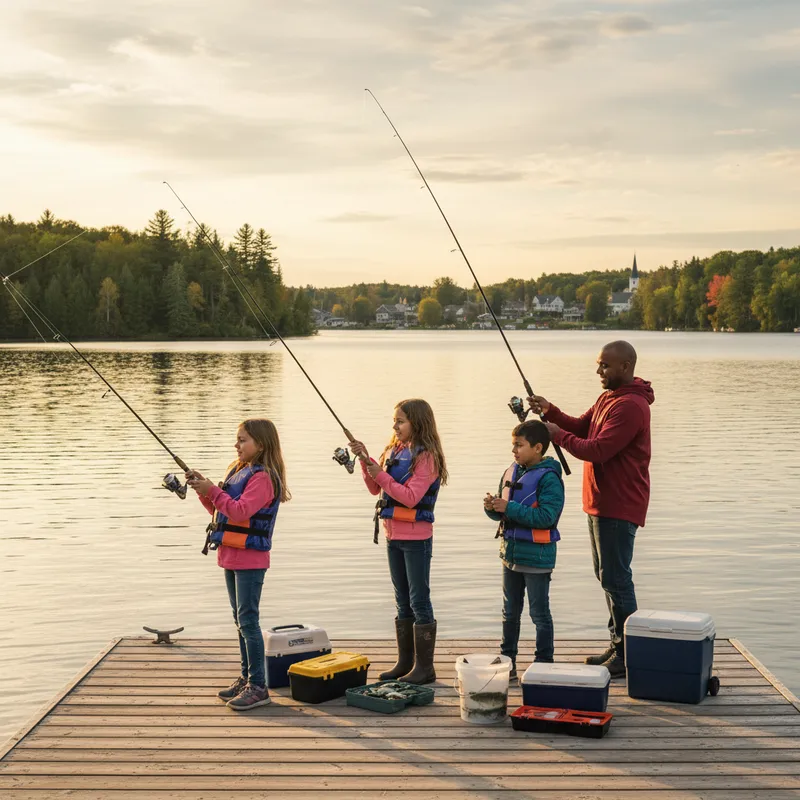
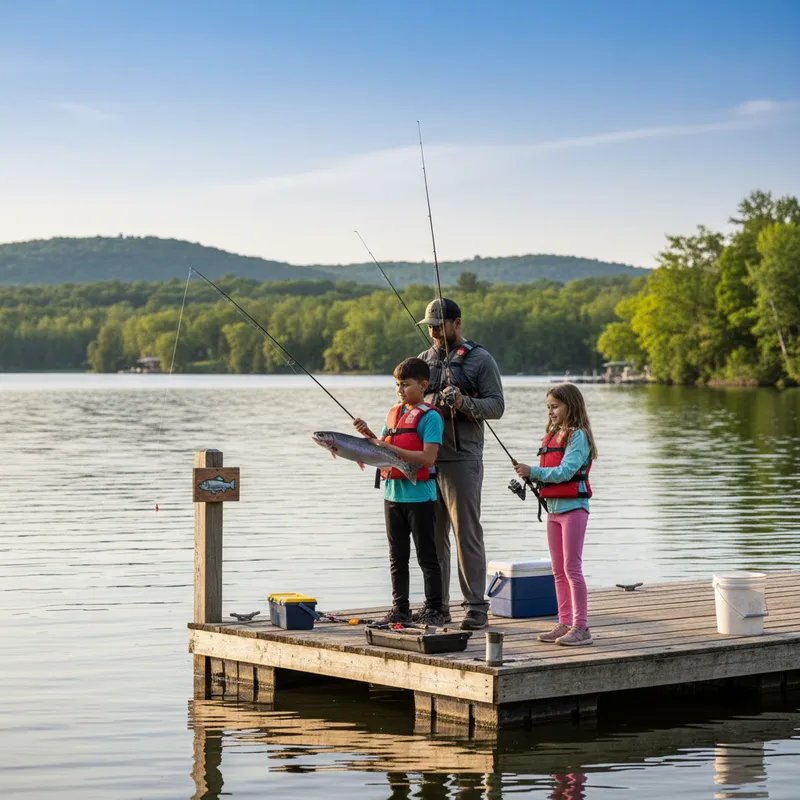
Water safety first: Piers, rocks and current are where accidents happen. Bring a properly fitted PFD for kids, avoid slippery algae-covered edges, and on rivers, keep children away from steep undercut banks.
Keep your lines out of trouble: Pack a small container for clipped line and used hooks. Wildlife entanglements are a preventable problem in urban parks.
Build in a backup plan: Wind can shut down pier fishing. Have a nearby pond or sheltered bay option, or plan a non-fishing activity nearby.
For a completely different kind of “day trip” inspiration, here’s a cross-site travel guide we liked for planning style and logistics: Beyond Portland: The 10 best day trips in Maine for 2026.
Editor’s note on accuracy: This guide focuses on accessible, public-facing entry points, but fishing regulations can change and can include site-specific exceptions. Confirm your exact location and species rules before you fish.