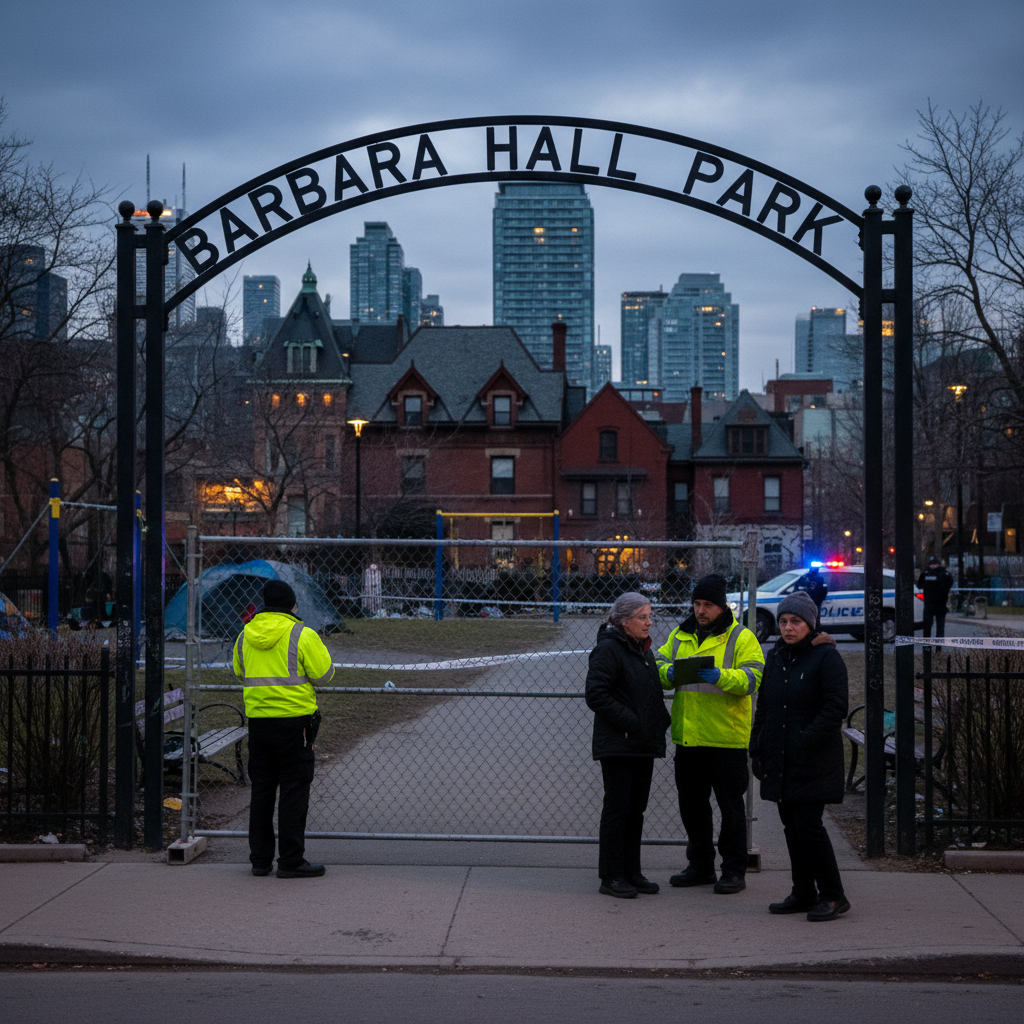
The City of Toronto is exploring the nightly closure of Barbara Hall Park in the Church-Wellesley Village following persistent complaints of violence, drug use, and vandalism that have left local residents divided. City staff have been directed to investigate potential solutions, including fencing off the park during overnight hours, after a city council committee heard emotional deputations from the public on Tuesday.
The motion, brought forward by Coun. Chris Moise, asks staff to gauge community support for the nighttime closure and to review a revitalization proposal from local AIDS service organizations. However, instead of voting on the proposal, the city's economic and community development committee referred the matter to two deputy city managers for a more thorough review.
The park is a vital community space, holding deep cultural significance as the home of both the Toronto AIDS Memorial and the Trans Memorial. This has made the prospect of restricting access a complex and sensitive issue.
Coun. Alejandra Bravo acknowledged the deep division on display at the meeting. 'There's no settled view here and you can hear it in the range of opinions that were expressed in the deputations,' Bravo says. 'While it is a very local question and a very tiny piece of geography, it's crucial that we attend to it at a very high level.'
A park divided
The motion from Coun. Moise highlights that the park has faced 'persistent health and safety concerns, significantly intensified by the COVID-19 pandemic and a rise in opioid-related incidents.' It notes that issues like vandalism and violence are especially pronounced at night and are concentrated around the memorials, which are situated in more secluded areas of the park.
Moise told the committee his goal was to make the park a 'safe and inclusive space' for everyone, expressing frustration that current efforts have fallen short. 'We have taken extraordinary steps to actually secure the park, make it safe,' Moise said. 'We are throwing everything at it. And it has not made much of a difference. It's not lack of trying.'
Community feedback presented to the committee reflected a sharp divide. Some residents, who have witnessed unsafe behaviour, are desperate for a solution. Resident Suzanne Calder reported seeing seven fires set within the park, underscoring the anxieties of those who feel the space has become a public hazard.
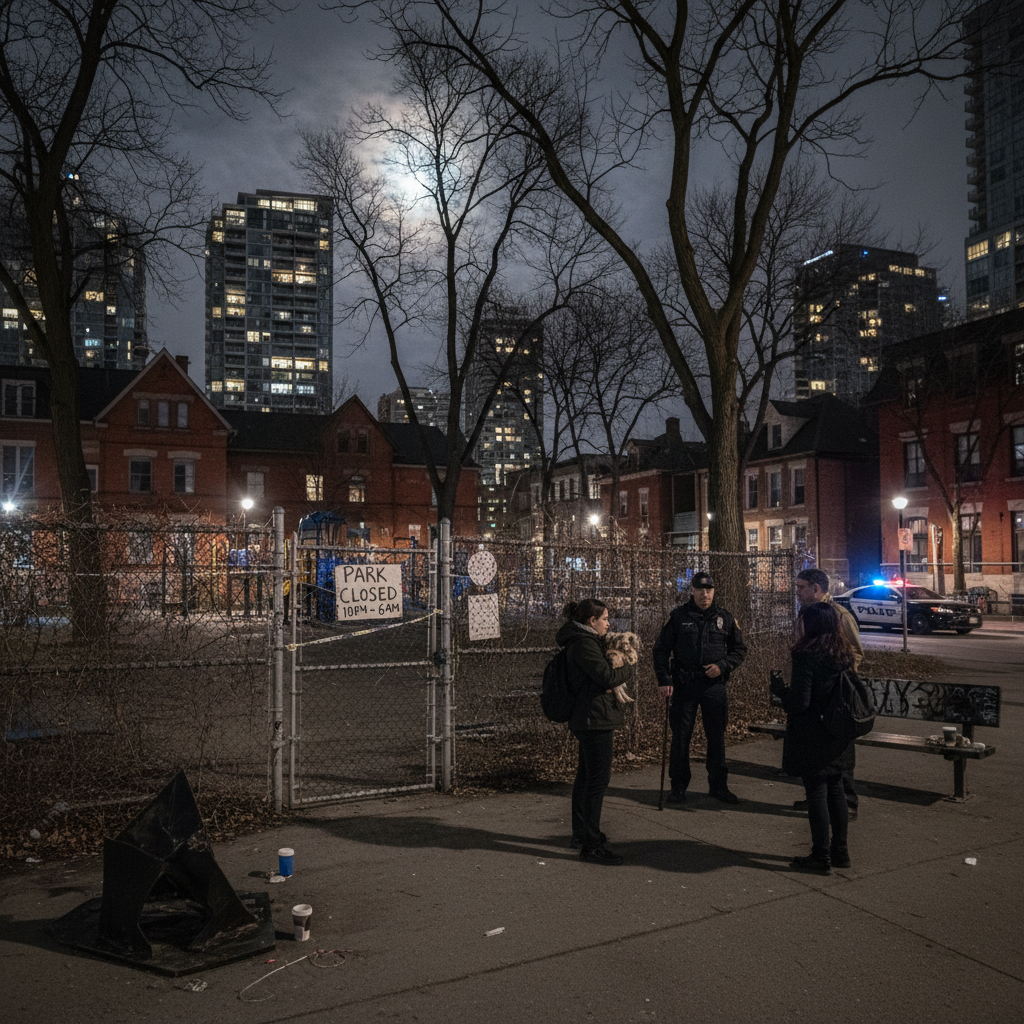
Others voiced strong opposition to the idea of fencing off a space of such profound importance. The AIDS Memorial, in particular, has served as a place of remembrance and grieving for decades. 'It's a living monument in our community, especially for people of my generation,' resident Tim McCaskell told the committee, arguing against the installation of a fence.
Existing safety measures
The city has not been idle in its attempts to manage the ongoing issues. According to the motion, a dedicated Barbara Hall Park Response Team, comprising city staff, local agencies, and community groups, has been established to find solutions. This has led to a multi-pronged approach to enhance safety and cleanliness.
Current measures include litter pickup three times a day, twice-daily needle collection to remove sharps, and patrols by a crisis outreach and support team for intervention and de-escalation. A community-based mobile team called Here to Help also responds to immediate concerns regarding conflict resolution. Additionally, contracted security guards patrol the area as part of the city's encampment protocol, and Toronto police from 51 Division conduct regular patrols. Despite this comprehensive response, the city acknowledges that 'overnight safety challenges persist.' The difficulties in Barbara Hall Park mirror a broader struggle in Toronto and other urban centres to address the complex intersection of homelessness, addiction, and mental health crises in public spaces. These issues have been exacerbated in recent years, placing immense strain on municipal resources and testing the balance between public access and public safety. The debate over the park is symptomatic of larger challenges related to supportive housing and social infrastructure, issues the city and province are trying to tackle with broader initiatives like the Ontario invests $178M in stalled Scarborough rental project.
The AIDS Memorial, managed by The 519 community centre, was first dedicated in 1993. According to The 519's official website, it contains pillars engraved with the names of community members lost to AIDS and serves as an important site for reflection and annual vigils. The potential closure raises questions about how the public can continue to access this sacred space for remembrance.
A path forward
With the motion now referred to senior staff, a decision has been postponed. The deputy city managers are tasked with reviewing all written and verbal submissions from the committee meeting and exploring the feasibility of both the nighttime closure and the community-led revitalization plans.
This referral effectively sends the issue back to the drawing board, allowing for a cooling-off period and a more in-depth analysis that considers the park's dual role as a public green space and a site of significant cultural heritage. The city is grappling with how to protect the memorials and ensure safety without disenfranchising the very community the park is meant to serve.
Staff are expected to report back to the committee with their findings and recommendations in the second quarter of 2027.